Gaza city ‘deplorable’ as Israel escalates threats to Houthis
As Tess Ingram, UNICEF’s Communication Manager, reports on the devastation in Gaza City, Israel shifts its focus to escalating tensions with the Houthis.

United Nations
Sphinx News: Ahmed Ali
As UNICEF reports on the dire conditions facing children in Gaza City, the Israeli government remains focused on escalating tensions with its Houthi adversaries.
In a statement released on X today, Israel’s Defense Minister Yoav Katz issued grave threats to Houthi forces in Yemen, declaring: “The Houthis are firing missiles at Israel again. A plague of darkness, a plague of the firstborn – we will complete all 10 plagues.” His remarks carried biblical undertones, referencing the disasters in the Book of Exodus that struck Egypt before the Israelites’ release from bondage.
The rhetoric comes amid intensifying hostilities between the Yemeni faction and the IDF. After months of sporadic clashes, tensions surged following Israeli airstrikes on Yemen’s capital, Sanaa, which killed 12 senior Houthi officials, including Prime Minister Ahmed Ghaleb al-Rahawi.
On Sunday, Houthi leader Abdel-Malik al-Houthi condemned the strike, calling it “a crime added to the criminal record of the Israeli enemy in the region.” The next day, the group claimed responsibility for a missile attack in the Red Sea that struck the Israeli-owned tanker Scarlet Ray.
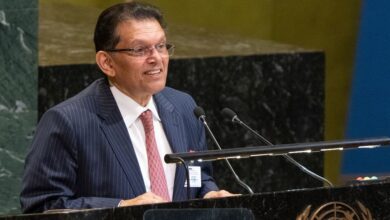
Israel’s strikes and the Houthis’ retaliation prompted Katz’s stern warning, signaling the potential for further escalation. UN spokesperson Stéphane Dujarric urged restraint, noting that UN Envoy Hans Grundberg “remains actively engaged with the Houthis, meeting them in Oman just two days ago.”
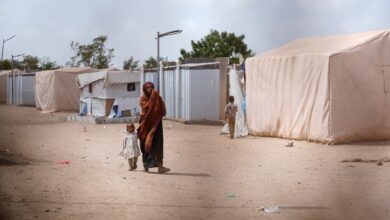
Meanwhile, conditions in Gaza City continue to deteriorate. Tess Ingram, UNICEF’s Communications Manager, described the enclave as “a graveyard for children.” Reporting from Gaza, she said: “The unthinkable is not looming—it is already here.” Ingram recounted stories of mothers losing infants in their arms, toddlers dying of starvation, and children suffering amputations—all in what she called an “entirely preventable” crisis.
UNICEF has urged Israel to fulfill its obligations under international humanitarian law, lift the blockade, and allow humanitarian operations to proceed. In the past six weeks, the agency has reached only 3,600 acutely malnourished children, while another 9,000 remain in urgent need of assistance. Ingram noted that “bureaucratic/security restrictions as well as the lack of funding” continue to pose major obstacles.
With just 11 partially functioning hospitals in Gaza City, Ingram stressed that “only five still have neonatal intensive care units. The 40 incubators between them are running at up to 200 per cent capacity, meaning as many as 80 babies are fighting for life in overcrowded machines, utterly dependent on generators and medical supplies that may run dry at any moment.”