Israel’s Strike on Doha Draws Global Condemnation
leaders, striking at the heart of Qatar's capital. The assault drew swift criticism from world leaders, international organizations, and regional actors, with Qatar condemning the strike as “state terrorism.” The incident threatens ongoing mediation efforts in Gaza and has prompted calls for an emergency United Nations Security Council meeting

United Nations
Sphinx: Ahmed Ali
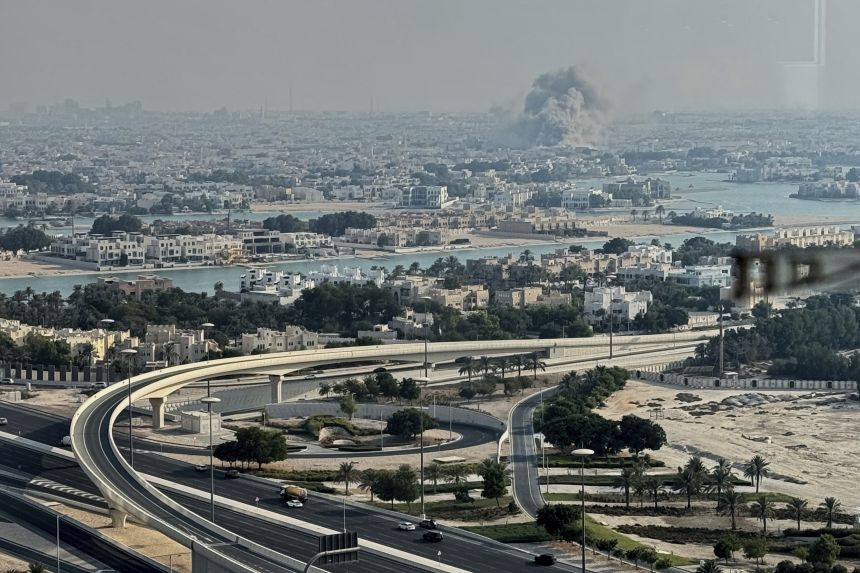
Following Israel’s attack on the Qatari capital, Doha, on Tuesday, the action has been met with widespread international condemnation. Later the same day, the Israeli administration stated that the strike targeted a “compound believed to be hosting Hamas political leaders.”
The attack on the capital of this influential Gulf state comes as Qatar, a leading mediator between Israel, the United States, and Hamas, has been spearheading global efforts to broker a ceasefire in Gaza.
In his official statement yesterday following the strike, Qatari Prime Minister Sheikh Mohammed bin Abdulrahman Al Thani affirmed that mediation is central to Qatar’s identity and vowed that nothing would prevent the country from continuing in this role. He said Qatar’s tradition of diplomacy “won’t be deterred.” At the same time, he acknowledged that the attack had reshaped the landscape of ongoing talks, casting doubt on their validity. The Prime Minister also called for a regional response to what he described as “barbaric actions” and confirmed consultations with regional partners. He further accused Israeli Prime Minister Benjamin Netanyahu of driving the region into “chaos” and “wasting” Qatar’s time, suggesting Israel was not negotiating in good faith.
Condemnation from the international community has been swift. U.S. President and Israeli ally Donald Trump was quoted on Tuesday after the attacks stating, “I am not thrilled about it” when asked for immediate reactions. United Nations Secretary-General Antonio Guterres echoed this sentiment, reacting to the belligerence of what he describes as “a country that has been playing a very positive role to a ceasefire and the release of all hostages.” The SG went on to add his “condemnation for this flagrant violation of the sovereignty and territorial integrity of Qatar.” Hamas, as well as Lebanese militia group Hezbollah, have also been highly critical of the attack. The groups called the “barbaric assault” one that “only adds to the catalogue of war crimes committed by the Zionist state.”
Despite criticism, Israeli politicians have maintained a firm stance. While the attack did not kill any of the targeted Hamas officials, Israeli diplomat Yechiel Leiter told the U.S., “If we didn’t get them this time, we’ll get them the next time.” Israeli Prime Minister Benjamin Netanyahu additionally threatened and hinted at future attacks on Qatar if it did not “expel Hamas members.” In a statement today commemorating the September 11, 2001, attacks in the United States, he said, “I say to Qatar and all nations who harbor terrorists, you either expel them or you bring them to justice. Because if you don’t, we will.”
In response, members of the United Nations Security Council (UNSC) have called for an emergency meeting at UN headquarters in New York on Thursday, with the Qatari Prime Minister expected to attend. Pakistan’s Deputy Prime Minister and Foreign Minister, Ishaq Dar, announced on X that Pakistan—together with Algeria and Somalia—had requested the meeting “to formally bring this matter before the Security Council, urging it to consider Israel’s aggression against Qatar as a grave threat to international peace and security.” X that Pakistan—together with Algeria and Somalia—had requested the meeting “to formally bring this matter before the Security Council, urging it to consider Israel’s aggression against Qatar as a grave threat to international peace and security.”