UN Funding cuts to deepen Global hunger
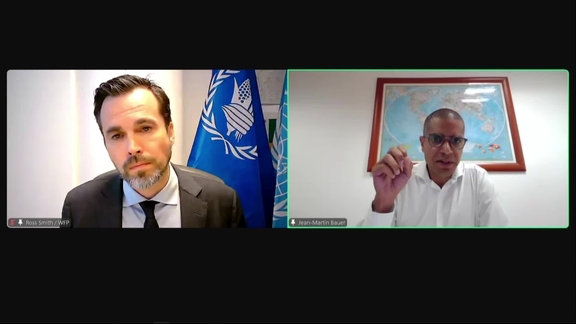
Jean-Martin Bauer, Director of Food Security and Nutrition Analysis at the World Food Programme, and Ross Smith, Director of Emergency Preparedness and Response for the WFP, briefed reporters on how major UN funding cuts are impacting the WFP’s critical response to countries in dire need.

United Nations
Sphinx News: Ahmed Ali
Jean-Martin Bauer, Director of Food Security and Nutrition Analysis at the World Food Programme (WFP), and Ross Smith, Director of Emergency Preparedness and Response for the WFP, briefed reporters today on the worsening impact of extreme funding shortages on WFP operations across the globe.
The officials underscored that funding cuts are drastically hindering the UN agency’s ability to sustain humanitarian efforts in countries facing acute crises. “Extreme funding cuts are drastically hindering WFP operations in nations in desperate need,” Bauer noted, emphasizing the urgency of restoring consistent financial support to the agency’s most critical missions.
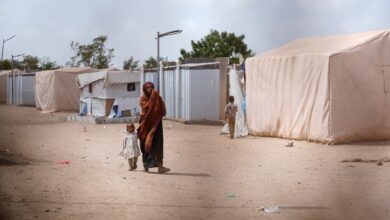
The officials outlined six specific countries currently “at a breaking point”: Afghanistan, the Democratic Republic of the Congo, Haiti, Somalia, South Sudan, and Sudan. They warned that unless immediate funding is restored, millions of people across these regions face the prospect of worsening hunger, displacement, and instability.
On Gaza, officials clarified that while challenges remain, the situation is somewhat less dire compared to other regions. “The funding shortage is not as acute for Gaza,” one official said, adding that “we are prepared for a stock-up response in Gaza and have three months of food supply ready to go.”
Despite these preparations, global hunger continues to deepen as a result of the financial strain. Smith pointed out that “190,000 metric tons is possible to provide for all of Gaza for three months,” illustrating both the scale of need and the fragility of existing reserves. He called on international partners to “raise the alarm on the acute food security where we need all resources to combat,” stressing that it is “essential to act as soon as you can.”
The officials also highlighted the growing risk that the WFP’s data and analysis systems will be compromised by the budget shortfalls. “We need information systems to be able to predict, analyze, and target regions in desperate need,” Bauer explained. “When we’re in a situation where funding is not available, data becomes increasingly important.”
“What we’re seeing with these budget cuts,” Smith added, “is that data will be negatively impacted.” The deterioration of these systems, they warned, could undermine the organization’s capacity to forecast food insecurity trends and respond to emergencies in real time.