UNFPA Director: “Gaza looks like a dystopian film, unfortunately it is not fiction.”
UNFPA Director Andrew Saberton briefed the international press on his recent visit to Gaza and the West Bank, warning of escalating humanitarian and psychosocial challenges, particularly affecting women and children.


United Nations
Sphinx News: Ahmed Ali
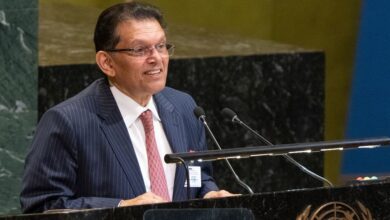
UNFPA Director Andrew Saberton, described his recent visit to Gaza and the West Bank as one filled with grief and despair, emphasizing the severe humanitarian and psychosocial conditions, particularly for women and adolescents. “Many women in Gaza have lost everything — their family members, their homes, their colleges, and their jobs,” Saberton said.
Traveling to both Gaza and the West Bank, Saberton characterized what he witnessed as “that of a dystopian film,” noting that he was unable to remain as long as planned due to Israeli security restrictions. “Gaza has been flattened,” he said. “Mile upon mile of rubble and dust, with few buildings left intact. I cannot unsee what I have seen.”
According to Saberton, every UNFPA staff member in Gaza has experienced the death or multiple deaths of relatives, with nearly all having lost their homes. “Our own staff, who are the providers of care for the community, are themselves the recipients of aid,” he said. “And yet, they have turned up every day for two years — no escape, no time off.”
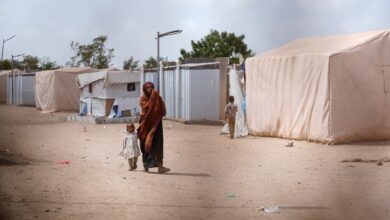
Women in Gaza face dire conditions, unable to access even the most basic hygiene supplies. With limited housing, families take shelter in half-destroyed buildings or makeshift tents. One in four Gazans is now starving — including over 11,000 pregnant women, for whom starvation poses catastrophic risks for both mother and newborn. Premature and low-birth-weight babies now account for nearly 70 percent of all newborns, and one in three pregnancies is classified as high-risk.
Saberton warned of “long-term effects on the Gaza population,” stressing that “11 percent of the population is dead or wounded,” and that malnutrition will have generational effects on newborns. He noted reports of women giving birth amid rubble, and that over 50 percent of youth and adults are experiencing PTSD.
The destruction of Gaza’s health system has been overwhelming: 94 percent of hospitals are damaged or destroyed, and maternal deaths are rising due to the lack of life-saving medicines. “Multiple newborns are crammed into one incubator due to a lack of fuel and equipment,” Saberton said. “We do not have enough money, the response is only about a third funded.”
UNFPA currently maintains 57 staff members across the region, including 16 in Gaza, of whom four are international staff. Saberton said, “The health system is devastated, and we need to get in there. International journalists need to have access to Gaza.”
Despite the enormity of the crisis, Saberton praised the resilience of those he met:
“I cannot think of a more resilient group of people than the ones I met.”
He underscored the urgent need for community-based rebuilding to revive civil society from the ground up, stressing the importance of sustainable recovery efforts beyond immediate aid. “We have to move from survival to rebuilding,” he said, linking this approach to broader discussions around future governance structures in Gaza needing to empower the Palestinian people and its local institutions.
Looking ahead, Saberton highlighted that recovery efforts must prioritize women and girls — rebuilding maternity wards for the 130 births that occur daily, restoring healthcare services, and reopening safe spaces to address gender-based violence, which has sharply increased.
“The ceasefire gave us a glimmer of hope,” Saberton added, “but we need all crossings open NOW.”
Spokesperson for the Secretary General, Farhan Haq, echoed this notion. In his briefing today he stated, “The Office for the Coordination of Humanitarian Affairs (OCHA) reports that, since the ceasefire entered into effect more than 10 days ago, the UN and our partners have made progress in scaling up our response efforts, especially in central and southern areas of the Strip. The continued closure of the Zikim and Erez crossings, which provide direct access to the north, makes it extremely challenging for the UN and partners to reach people there with vital support at the scale needed.”
On direct corroboration with Israeli authorities, Haq added, “Inside Gaza yesterday – and out of 10 humanitarian missions coordinated with the Israeli authorities – six were facilitated, including the collection of water tanks, hygiene kits and fuel from the crossings into Gaza.”
Despite ongoing restrictions, 263 trucks from the United Nations and its partners entered through the Kerem Shalom (Karem Abu Salem) and Kissufim crossings on Monday. The UN, however, continue to reiterate that operations could be significantly expanded and reach all parts of Gaza if security restrictions imposed by Israeli authorities were lifted.