Fragile Ceasefire Holds in Northeast Syria Amid Fighting and Political Talks
UN Warns of Rising Violence as Fragile Ceasefire Holds in Northeast Syria

United Nations
Sphinx News: Ahmed Ali
A four-day ceasefire between the Syrian government and the Kurdish-led Syrian Democratic Forces (SDF) came into effect on Sunday, as talks are set to begin on the possible integration of Hasakah governorate into the Syrian state.
Announcing the truce, Syria’s presidency said the ceasefire would allow space for negotiations and confirmed that, should an agreement be reached, “Syrian forces will not enter the centers of the cities of al-Hasakah and Qamishli and will remain on their outskirts.” The statement added that discussions would follow on “the timetable and details of the peaceful integration” of the province, including arrangements under which “no armed forces will be present in Kurdish villages other than local security forces drawn from the residents of the area.”
The SDF welcomed the ceasefire, saying it would “not initiate any military action unless our forces are subjected to any attacks in the future.” In a statement, the group said it remained “open to political paths, negotiated solutions, and dialogue,” and was prepared to move forward with the implementation of the January 18 agreement “in a manner that serves de-escalation and stability.”
However, the truce follows days of intense clashes. Earlier on Sunday, the SDF said its fighters were “repelling intense attacks launched by Damascus factions on the villages of Hamdoun, Qibah, and Ja’da,” south of Kobane, adding that fighting was also ongoing along the al-Jallabiyah line.
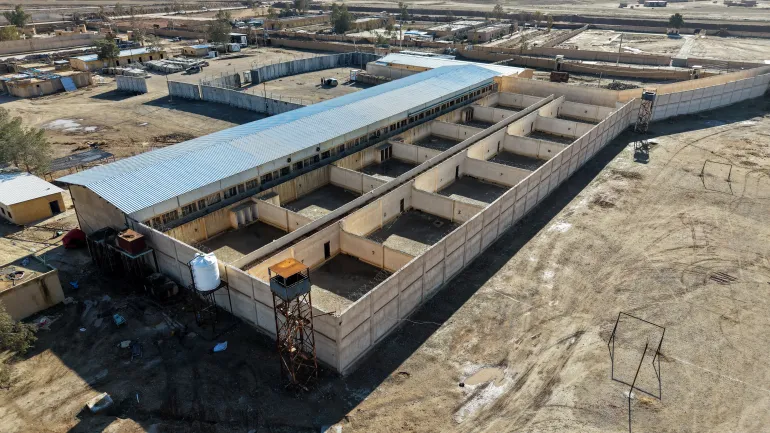
SDF commander Mazloum Abdi accused Syrian forces of escalating attacks on detention facilities holding ISIL (ISIS) fighters and their families. “Attacks are dangerously escalating on detention facilities holding ISIS fighters and families in al-Shaddadi and al-Hol camp,” Abdi said in a statement carried by Hawar News Agency. He added that “since last night, al-Hol camp has been subjected to intense assaults and attempts to storm and seize it by force.”
Abdi said SDF guards had come under attack from “military convoys, armored vehicles, and tanks,” forcing them to withdraw. “We have withdrawn to predominantly Kurdish areas, and protecting them is a red line we will not hesitate to defend,” he said, calling on the international coalition “to assume its responsibilities in protecting facilities detaining ISIS members.”
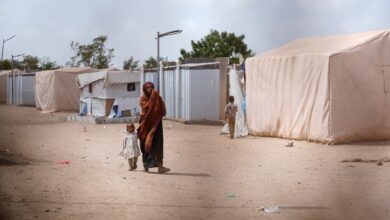
The Syrian Interior Ministry later said government forces had begun taking control of al-Hol camp, following the SDF’s withdrawal. The camp houses thousands of relatives of ISIL fighters, as well as other displaced civilians.
The Women’s Protection Units (YPJ), which operate under the SDF, warned that the situation at the camp remained highly dangerous. “There are thousands of ISIS members in al-Hol,” the group said, adding that Kurdish authorities had long warned of the risks. “The Autonomous Administration as well as the military forces always draw attention to the danger posed by the camp. But the international community was not paying any attention.”
Concerns intensified after a US official told Reuters that approximately 200 low-level ISIL fighters escaped from al-Shaddadi prison after SDF guards left the facility, though many were later recaptured by Syrian government forces. The official said around 600 foreign ISIL fighters had been transferred to other detention sites prior to January 19 and remain in custody.
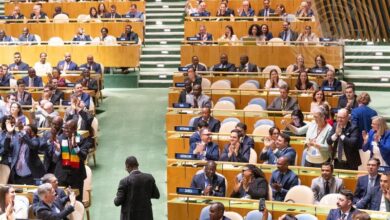
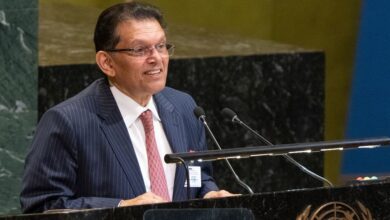
At the United Nations, Syria’s Ambassador Ibrahim Olabi said Damascus was working closely with Washington to manage the situation. “We’ve been working for a year now constructively and trying every option,” Olabi told reporters. “This is the third or fourth proposal that we have put forward.” Asked what would happen if the ceasefire expires without a broader agreement, he said, “We would hope that this agreement holds. We’re working with our partners at the United States to make sure that it holds.”
Olabi also criticized the SDF over the reported prison escapes, saying “it’s a shame” that the group had placed its international partners in such a position. At the same time, he stressed that the United States had recognised Damascus’s ability to “deliver on all our promises” and take steps “to enshrine Kurdish rights.”
The ceasefire coincides with a significant shift in US policy. US Special Envoy for Syria Tom Barrack said Washington now views the Syrian state as its main partner in the fight against ISIL, urging Syrian Kurds to agree to full integration with Damascus.
The United Nations has expressed deep concern over the violence. In comments delivered by Deputy Spokesperson Farhan Haq, the Secretary-General said he was “following with great concern the continuing violence in northeast Syria.” He “strongly calls for full respect for international law and the protection of civilians,” Haq said, adding that the Secretary-General also “stresses the importance of securing detention facilities.”
“The Secretary-General urges the parties to continue dialogue and to move forward in good faith and work together to secure the implementation of all agreements,” Haq added.
As the four-day ceasefire holds, questions remain over the future of the SDF, the fate of ISIL detainees, and whether negotiations will produce a durable political arrangement for northeastern Syria.