UN steps up humanitarian aid as more than 50 killed in hostilities between Hezbollah and Israel
As Hezbollah and Israel resurfaced into direct attacks following the recent war with Iran, the UN says, “The Lebanese people are once again in the crosshairs of a conflict.”

United Nations, New York City
Sphinx News: Ahmed Ali
As direct conflict between Israel and the Lebanese group Hezbollah resurges after more than a year, the United Nations warns of an exceedingly volatile situation, where over 50 have been killed, hundreds injured, and thousands displaced.
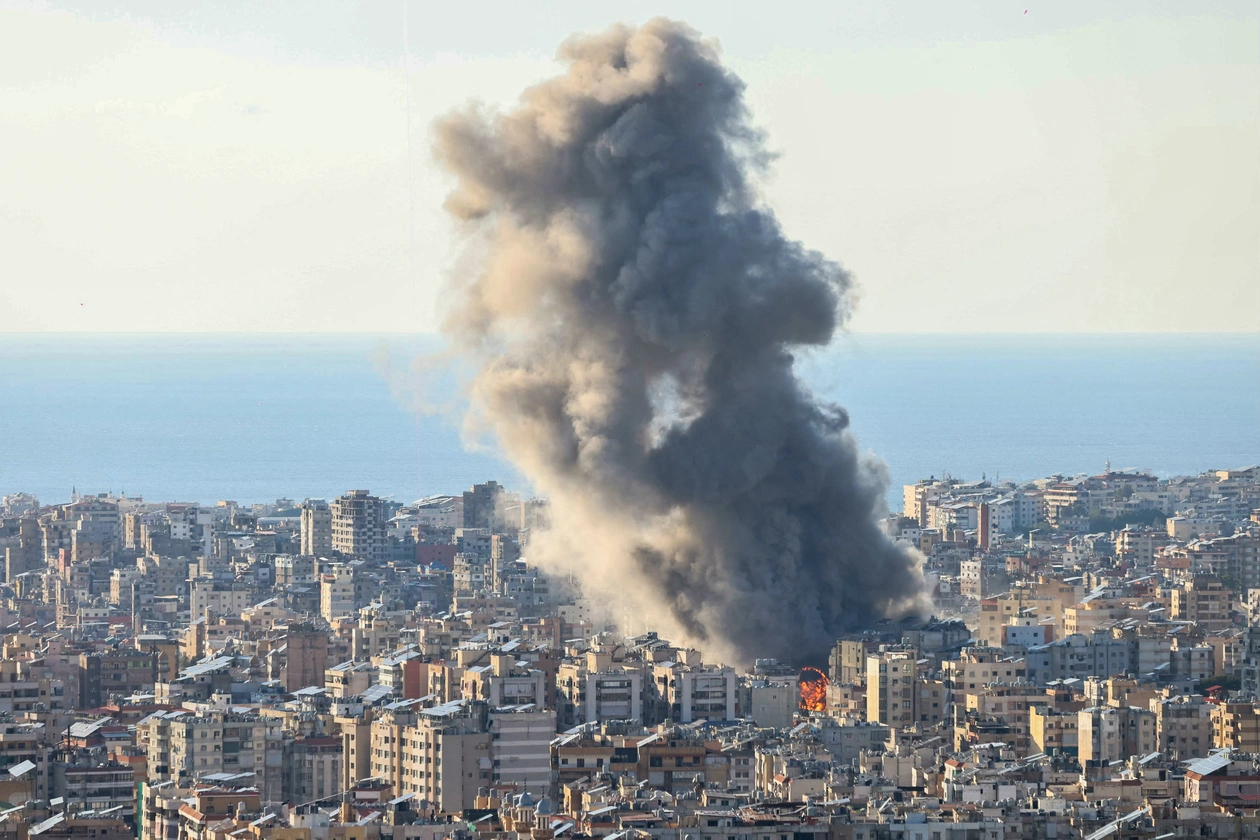
Just today, a wide array of Israeli airstrikes hit southern Lebanon, Baalbek, Chouf, and the southern suburbs of Beirut, where Spokesperson for the Secretary-General, Stéphane Dujarric, says the strikes caused “further casualties and significant destruction.” Just yesterday alone, the UN confirmed the death of “three paramedics” responding to initial Israeli airstrikes, compounded by another six civilians brutally injured.
Along the southern invisible “Blue Line border” mandated for the operations of UNIFIL (United Nations Interim Force in Lebanon) peacekeepers, reports suggest continued Hezbollah rocket fire towards Israel and the Israel Defense Forces’ (IDF) airstrikes and extensive fire north of the Blue Line. Additionally, reports say UNIFIL authorities “note with serious concern the IDF statement calling for evacuation of residents of South Lebanon to north of the Litani River.”
The hostilities have severely accelerated the already looming refugee crisis along the southern Lebanese border, where Dujarric reports that, according to local authorities, “at least 80,000 people have sought refuge in collective shelters in Lebanon.” The UN underscores the potential understatement of these statistics, contending, “we believe this represents only a fraction of all people who have been displaced.”
While aggression has not abated, the UN says “rapid response teams are assessing needs and distributing emergency supplies in affected areas and collective shelters,” where so far “more than 20,000 displaced people have been provided with hot meals and over 15,000 with ready-to-eat food” across southern Lebanon.
In collaboration with the Lebanese Ministry of Health, the United Nations has been “providing medicine and scaling up mobile primary health care services in shelters and other locations.”
The UN warns, however, that current supply is being massively stretched, where a lack of financial assistance needed to reach the estimated “1.5 million vulnerable people” has circumscribed the organization’s effort at scaling up its distribution. Dujarric underscores the “urgent additional funding” needed to meet the $1.6 billion 2026 appeal to sustain and expand lifesaving operations.
The Secretary-General, therefore, reaffirms his claim, supporting the decision by the Lebanese Government earlier this week to “accelerate efforts toward asserting the state’s monopoly of arms across Lebanon,” arguing that it is “imperative that Hezbollah respect the Government’s decision, as well as Security Council resolution 1701.” To this end, both Jeanine Hennis-Plasschaert, the Secretary-General’s Special Coordinator for Lebanon, and Major General Diodato Abagnara, the UNIFIL force commander, are continuously working with all parties.
The Secretary-General equally calls for the unequivocal cessation of all hostilities, along with respect for international law and basic humanitarian principles against the targeting of civilians or civilian infrastructure.
As of the current time, following an additional Israeli military strike targeting Hezbollah force south of the Litani River, the Lebanese Health Ministry says “at least 72 people have been killed,” coupled with the displacement of more than 83,000 people.