UN Security Council clashes amid tensions in Lebanon
As the Security Council meets today to discuss the situation in Lebanon, UN officials and high-level delegations urge a cessation of hostilities, prompting broader rhetorical exchanges among member states.

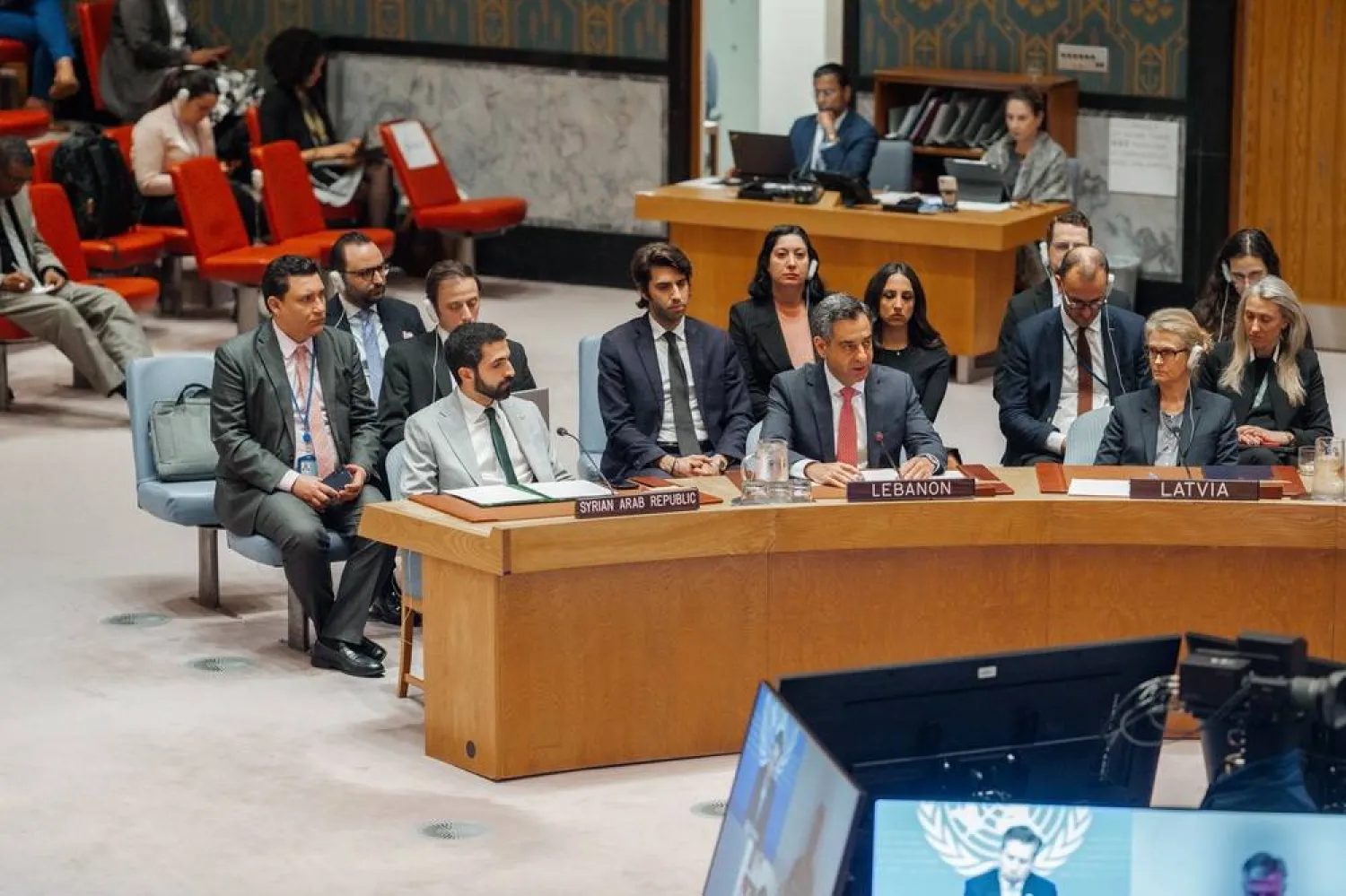
United Nations, New York City
Sphinx News: Ahmed Ali
Senior UN officials and high-level delegations met at the Security Council today to discuss the situation in Lebanon, prompting denunciations of continued hostilities and rhetorical exchanges on who is to blame.
According to both the Lebanese Health Ministry and the United Nations humanitarian agencies, in just the last 12 days of fighting, following direct renewed hostilities between the Lebanese group Hezbollah and the IDF (Israeli Defense Forces) after the killing of Iranian Supreme Leader Ali Khamenei in U.S.-Israeli strikes, more than 634 Lebanese civilians have died, with another 800,000 Lebanese displaced from their homes.
As the escalations pervade, particularly in Southern Lebanon south of the Litani River, the displacement crisis and military bombardments have debilitated the Lebanese public sector, prompting Rosemary DiCarlo, Under-Secretary-General for Political and Peacebuilding Affairs, to renew calls for “an immediate de-escalation and cessation of violence.”
Under-Secretary-General for Humanitarian Affairs Tom Fletcher echoed the concerns of DiCarlo, adding that this is “a moment of grave peril for Lebanon and for the region.”
“As a result of the region’s latest war, and following months of violence, we’ve watched the humanitarian crisis in Lebanon intensify with alarming speed,” he later noted.
Despite the deteriorating situation, Fletcher said the United Nations is responding comprehensively, scaling up its humanitarian operations and distribution efforts to Lebanese civilians in need. He told the Council that the United Nations and its humanitarian partners “have provided over 500,000 hot meals, distributed over 270,000 litres of bottled water, provided hygiene items and household supplies and 123,000 litres of fuel to sustain critical services.”
Recalling their earlier appeals to reporters this morning, in a joint Security Council stakeout comprised of Armenia, Austria, Cyprus, Denmark, Finland, France, Ireland, Latvia, Malta, Panama, Poland, Spain, the United Kingdom and Uruguay, Jérôme Bonnafont, the French ambassador to the United Nations, told the Council, “Faced with war, Lebanon must be supported. Its sovereignty and territorial integrity must be preserved.”
Ambassador Bonnafont was specifically polemical in his rhetoric against Hezbollah, adding that France, Britain, Germany, India and Korea “condemn in the strongest terms” Hezbollah’s attacks.
Permanent Representative of Israel to the United Nations Danny Danon asserted that “Israeli forces will continue to operate in Lebanon as long as there will be a threat against us.”
He continued, “Israel does not want to be operating, but Israel will not accept rockets fired at our people, and we will do whatever is necessary to stop them.”
While Israel, and France’s joint member state body have largely condemned Hezbollah for dragging Lebanon into a regional war, Russia primarily blamed the United States and Israel over their strikes on Iran.
Anna Evstigneeva, Russia’s deputy UN envoy, told the Council, “It is the American and Israeli military escapade that is plunging the overall region ever deeper into chaos.”
The Lebanese ambassador, Ahmad Arafa, said Lebanon “finds itself trapped in a war that it did not choose between Israel and Hezbollah,” adding that “Lebanon is facing an extremely dangerous moment and a true humanitarian catastrophe.”