UN General Assembly Adopts Resolution Recognizing Slavery as “the Gravest Crime Against Humanity”
Adopting resolution A/80/L.48, the General Assembly recognizes the slave trade as the gravest crime against humanity, a move the Ghanaian delegation views as a major step toward “healing and justice.”

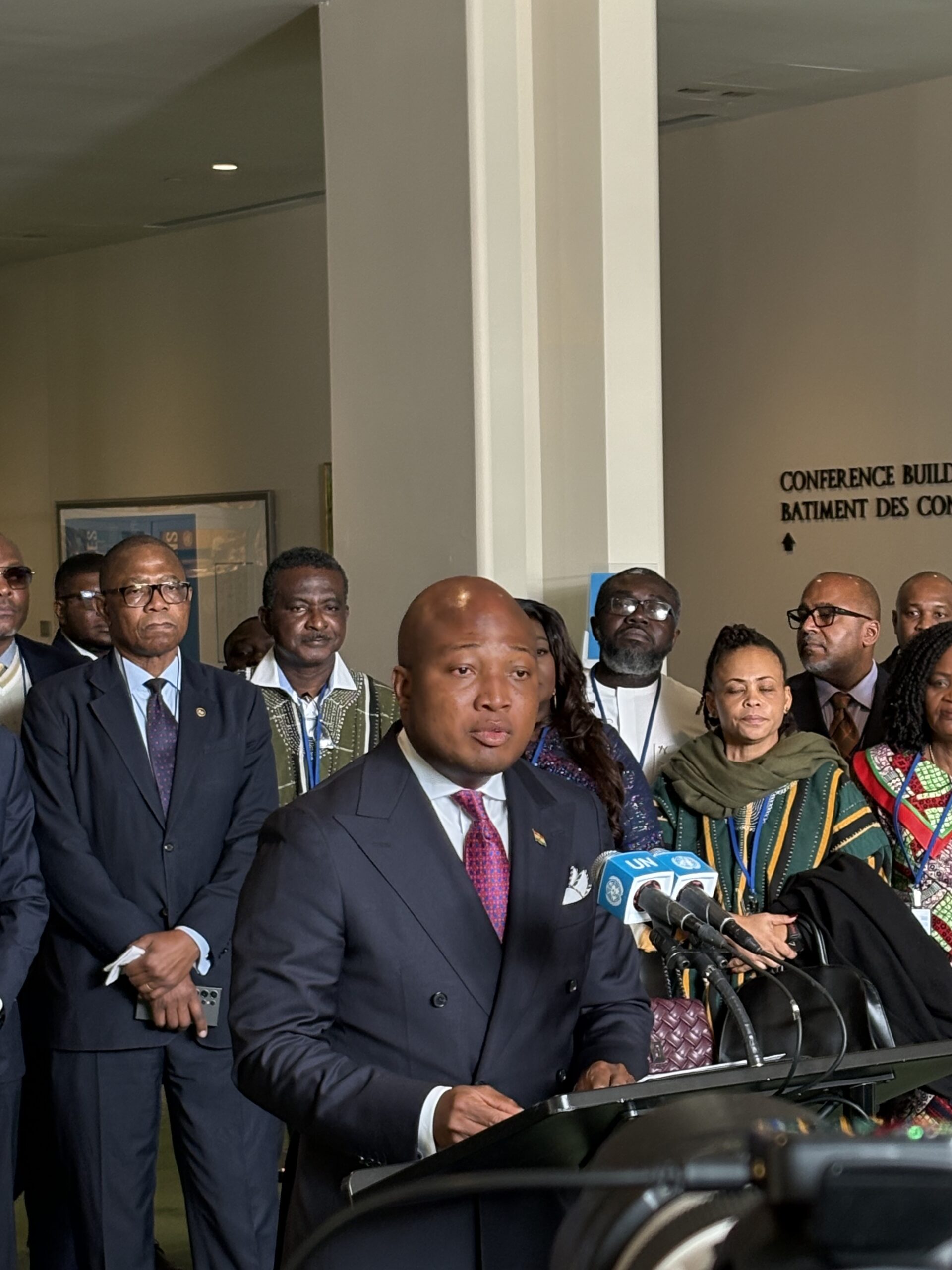
United Nations, New York City
Sphinx News: Ahmed Ali
Adopted today at the United Nations General Assembly in New York City, Member States advanced a Ghanaian-led resolution asserting that slavery, its function, repercussions, and systemic subversion, is the “gravest crime against humanity.”
The resolution passed through the Chamber with 123 states in favor, 52 abstentions, and 3 against. The 3 Member States that voted against the resolution were: the United States, Argentina, and Israel.
WHAT IS THE RESOLUTION PUT FORTH?
In its contents, the original draft resolution, before it was formally adopted as resolution A/80/L.48, recognizes the 400 years of the transatlantic slave trade, underscoring both its lasting consequences, felt throughout the world, and welcoming the importance of continuing education and awareness-raising.
As it is stated, the resolution, “Declares the trafficking of enslaved Africans and radicalized chattel enslavement of Africans as the gravest crime against humanity,” subsequently denouncing the developments’ enduring “global consequences… including the large-scale destruction of African societies… and the entrenchment of radicalized inequalities.”
The resolution contends further that “the legacies of slavery persist today in the form of structural racism,” affirming “the importance of addressing historical wrongs and emphasizing that claims for reparations represent a concrete step toward remedying them.” In its practical purpose, the resolution seeks to set a monumental global precedent, urging “Member States to engage in dialogue on reparatory justice, including a full and formal apology, compensation, and guarantees of non-repetition (from those responsible).”
Ultimately, the resolution posits that formally acknowledging these travesties within such a sanctified chamber illuminates “the importance of truth, remembrance, education and historical justice as essential components of reconciliation and sustainable peace.”
STATEMENTS MADE ON THE DRAFT RESOLUTION YESTERDAY
The resolution, before it was formally adopted today, was most adamantly supported by Ghana, where its President, John Mahama, one of the African Union’s most vocal supporters of slavery reparations, and delivering his speech on behalf of the African Group, visited the United Nations headquarters yesterday to promote the “historic” gesture.
He told the UN on Tuesday that the resolution “allows us as a global community to collectively bear witness to the plight of more than 12.5 million men, women and children, whose homes, communities, names, families, hopes, dreams, futures and lives were stolen from them over the course of 400 years.”
Mahama referred to it as a “safeguard against forgetting,” where he says countries like the United States, and its current administration, have “moved to ban books on the subject, to stop teaching students about the truth of…slavery, segregation and racism.”
Amma Adomaa Twum-Amoah, the African Union’s Commissioner for Health, Humanitarian Affairs and Development, said that “to name these atrocities clearly is to remove the last veils of ambiguity from the historical record.”
She adds, “It is to say that what was done to Africans was not a tragic accident of history, but the result of deliberate policies whose legacies structure today’s inequalities. Justice begins with calling things by their proper names.”
The full scale of redress, however, goes beyond simple acknowledgement, where the Ghanaian Foreign Minister, Samuel Okudzeto, told members of the press yesterday, “One pathway toward restorative justice is that all the looted artifacts are returned to the motherland,” adding, “The perpetrators of the transatlantic slave trade,” the United States and the Europeans, must “formally apologize to Africa and to all people of African descent.”
He contends that reparations and formally acknowledging the consequences of history do not “rank suffering.” On this point, he adds, “We are not ranking suffering when we say that the transatlantic slave trade represents a ‘gravest crime against humanity,’ it is not to introduce a hierarchy. What we are saying is that if you look at all of the atrocities that have happened in the history of humanity, none have been this systemic, this prolonged, over 300 years, and the lingering consequences of that.”
GHANA FOREIGN MINISTER COMMENTS TODAY ON THE ADOPTION
Following the resolution’s adoption today, Okudzeto once again spoke to members of the press, defining the development as a “historic step forward.” By passing the resolution, Okudzeto says, “we have not simply passed a text, we have affirmed a truth, choosing remembrance over violence, dignity over erasure, and shared humanity over division.”
The “emphatic victory for justice,” Okudzeto notes, sustains a critical humanitarian standard, where humanity and restorative justice have triumphed over the imperceptible propensity of structural impunity.
Okudzeto thanked the Member States that voted in favor, characterizing their stance as definitive, engaging, and reflective, taking a “major step towards the ongoing journey of reparative justice.”
Commenting on the Member States that both abstained and voted against, Okudzeto denounced one of the justifications as a “red herring,” characterizing the contention of “no time for diplomatic engagement” as attempts to “prolong negotiations.” The effort to redirect the issue into a seemingly more hopeful and foreseeable future blocks prospects for justice, disguised instead as open attempts to “not reckon and not come to the table with urgency and acknowledgment.”
Secondly, Okudzeto rejected Member State claims aimed at demeaning the resolution as an “attempt to rank suffering,” highlighting that such an argument negates the entire purpose of the discourse. He says, “It is not about hierarchy, but speaking to a historical fact.” Such a systemic crime with lingering consequences in the contemporary order, manifested in “racism and structural inequality,” must be addressed, and addressed in such a manner that contextualizes its uniqueness and applicability into modern-day relations. Similar to the rationale of “timing,” Okudzeto defined these efforts as “deliberate stonewalling.”