Rebeca Grynspan, candidate for Secretary General
As a key candidate for the next Secretary-General, Rebeca Grynspan of Costa Rica addresses the press, civil society organizations, and Member States, presenting her vision for the future of the United Nations.

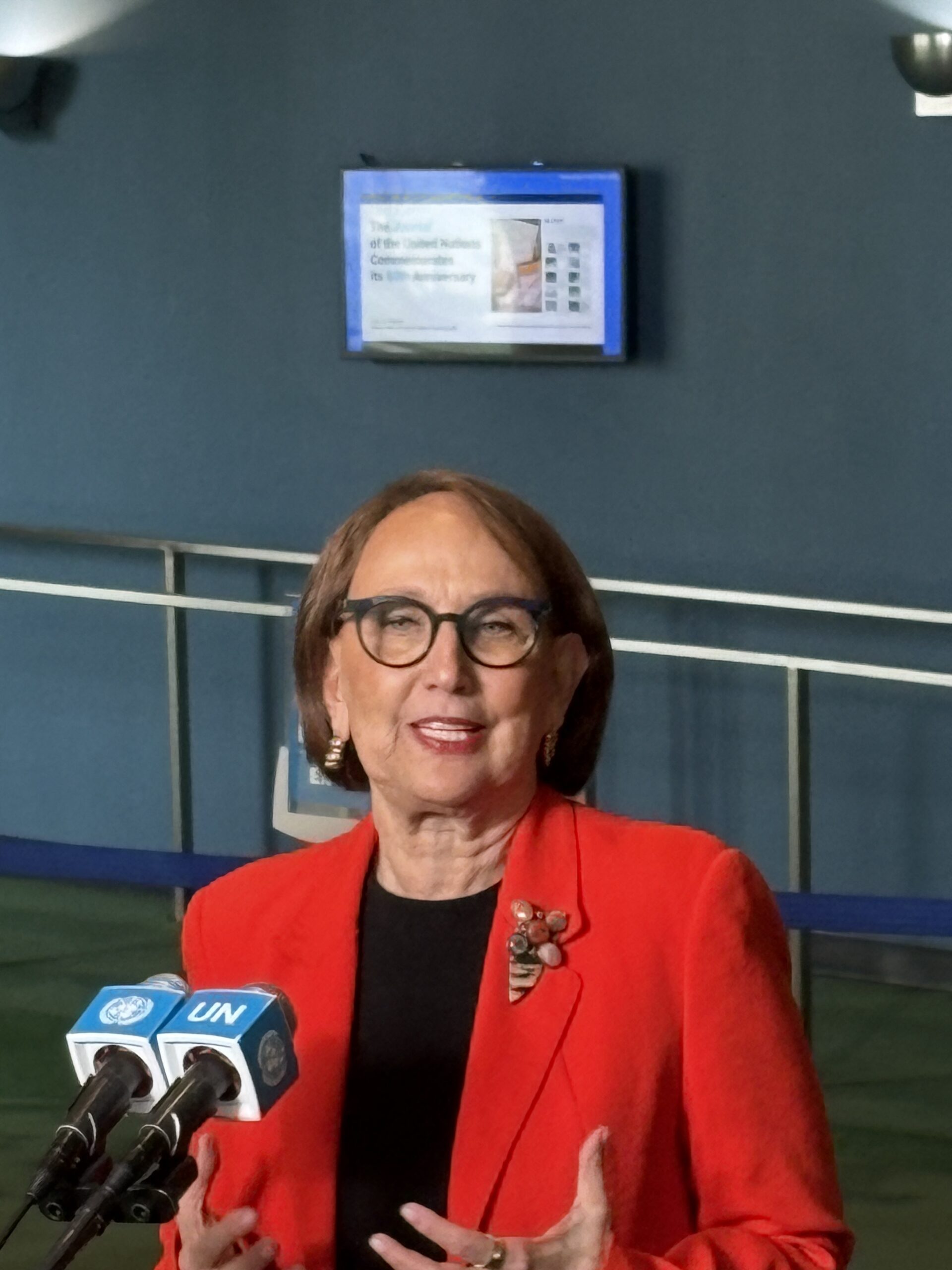
United Nations, New York
Sphinx News: Ahmed Ali
A key candidate for the next United Nations Secretary-General, the Costa Rican national Rebeca Grynspan, vows a leadership centered on reform and peacemaking.
Former Costa Rican vice president and head of UNCTAD (United Nations Trade and Development), Ms. Grynspan pledged today at the United Nations that peacemaking will be at the top of her priorities as Secretary-General, leading an initiative aimed at amending the organization’s current architecture and functionality.
Her repeated insistence on reform is predicated on an intent to “restore trust in the organization,” an aim, she says, that will be carried out through perseverance and “acceptance of rejection.” Where the United Nations has been on the receiving end of a purported “relevance crisis,” Grynspan told Member States, civil society organizations, and the press, “I will be a peacemaker. I will land before conflicts erupt, be the first to pick up the phone. I will travel to where the wars are. I will speak to every party. I will work with the Security Council, with the Member States, and will mediate among the mediators.”
Pledging a more proactive role, Grynspan added, “To defend the United Nations today is to have the courage to change it.”
Grynspan structured her remarks on ingenuity, approaching global dialogue and international diplomacy through “calculated risks.” Under her leadership, the United Nations will seek to take a more active mediating role in conflict resolution, proposing what she describes to be “ideas that are outside of the box… not because you are always right, but because your presence CAN make a difference,” potentially “enriching” other perspectives.
The greatest risk for the United Nations, Grynspan remarks, is one of “not trying,” adamant that her goal is to restore the United Nation’s rightful place at the table no matter how many “nos” she gets in the process.
With respect to her overarching credentials, what may potentially separate her from the other candidates, Ms. Grynspan told the press that she brings a lot of relevant experience in both “politics and government,” later calling herself a “very well rounded candidate.” A key figure in brokering contentious peace deals like the Black Sea initiative in 2022, Ms. Grynspan adds that she has “navigated very difficult situations… worked in and outside the UN… stood plenty of times under pressure… and worked alongside many other intergovernmental organizations.”
Commenting on the existing grievances in the Middle East, Grynspan mentioned the volatility surrounding the Strait of Hormuz, anticipating in her capacity as former Secretary-General of UNCTAD that such costly endeavors would lead to “more vulnerable countries suffering.” Ms. Grynspan’s individual assessments and published articles foresaw the existing hostilities, contending that the “chokepoints of maritime transport” were bound to be utilized for political agendas.
It is this very knowledge and experience, she highlights, that is needed within the current leadership architecture and subsidiary agencies of the United Nations, conducting research, reports, and facilitating global dialogue that predicts future disputes, allowing for a more prescient, engaged, and “flexible” United Nations, one that can “be there to propose a solution.”
Ending her remarks with a promise to be a “strategist,” Grynspan underscored the necessity of building relationships with members of the P5 in the Security Council, telling members of the press that she would “consider attending the Security Council’s informal consultations” as a way to fortify relationships with government officials, “building trust through integrity and impartiality.”