UN warns ‘sporadic clashes’ continue in Sweida. ‘Crisis is not over’
While a fragile ceasefire persists in Sweida, the predominantly Druze city in southern Syria, UN Humanitarian Chief Tom Fletcher cautions that the crisis remains unresolved. Syrian Special Envoy Geir O. Pedersen calls for strengthened international cooperation and support for local interim authorities to uphold security and prevent sectarian tensions from reigniting.

United Nations
Sphinx News: Ahmed Ali
United Nations Emergency Relief Coordinator Tom Fletcher warned that “the humanitarian crisis in Sweida is “not over.” As Under-Secretary-General for Humanitarian Affairs, he acknowledged that the fragile ceasefire announced on July 19 “has largely held,” but noted that irregular clashes remain widespread.
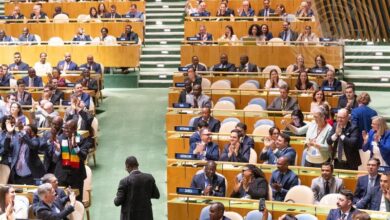
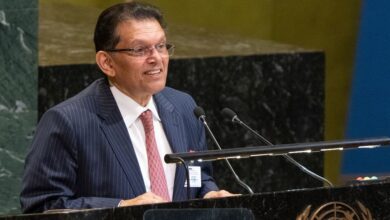
Briefing the Security Council on Thursday, United Nations Special Envoy for Syria Geir O. Pedersen addressed His Excellency, Council President Ambassador Eloy Alfaro de Alba of Panama. Pedersen’s remarks followed a surge of sectarian violence in southern Sweida Province.
The fighting, which began on July 13 between Druze and Bedouin armed groups, quickly drew in Syria’s transitional government forces. During the 7 day stretch of conflict, the Syrian Observatory for Human Rights and the Office of the UN High Commissioner for Human Rights have reported more than 1,400 deaths—mostly civilians—and the displacement of some 87,000 people.
Nearly a month after the U.S.-brokered truce between Druze leaders and Bedouin tribes, Pedersen warned that tensions remain high. “We are still seeing dangerous hostilities and skirmishes on the margins of Sweida, and violence could resume at any moment,” he cautioned. The envoy stressed that “more tangible, binding measures” are needed to prevent renewed conflict.
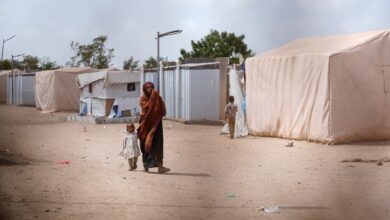
With 16 million Syrians in urgent need of humanitarian assistance and 185,000 more displaced across Sweida, Dar’a, Rural Damascus, and beyond, deep social divisions remain a factor for the state’s instability. Fletcher emphasized: “We must sustain urgent delivery of food, health services, shelter, clean water, fuel, restoration of water and electricity infrastructure, and education.” He added that the United Nations is also coordinating with Syrian interim authorities and the Syrian Arab Red Crescent to help local actors curb further violence.