Three Palestinians killed in Gaza as UN warns of little progress in humanitarian aid distribution
UN officials stress urgency to open crossings and scale up humanitarian response amid ceasefire window

United Nations
Sphinx News: Ahmed Ali
Three Palestinians were killed today in Gaza, as UN officials reiterated the urgent need to expand humanitarian access and sustain the fragile ceasefire.
Commenting on the incident, Spokesperson for the Secretary-General Stéphane Dujarric stated, “We are not a mediator in this conflict. We are not the ones who will call a violation of the ceasefire, but we do not want to see anyone killed.”
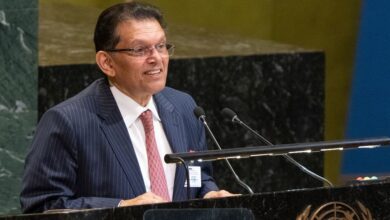
Speaking from Cairo today, Under-Secretary-General for Humanitarian Affairs and Emergency Relief Coordinator Tom Fletcher underscored that humanitarian teams have been preparing for this moment for months, but without full access and international NGO engagement, operations cannot deliver at the scale required.
Despite the urgent need for humanitarian assistance, Israeli forces continue to keep the Rafah Crossing closed. The crossing serves not only as a critical entry point for humanitarian workers into the besieged enclave, but also as the only route allowing critically ill and injured Palestinians to seek treatment abroad. Its continued closure threatens Gaza’s last remaining lifeline to the outside world.
UNICEF spokesperson Tess Ingram echoed Fletcher’s concerns, telling reporters, “There are 28,000 children who were diagnosed with malnutrition in July and August alone, and thousands more since then. So, we need to make sure it’s not just food coming in, but malnutrition treatments as well.”
Despite these challenges, humanitarian teams inside Gaza continue to make the most of the ceasefire’s limited window. On Tuesday alone, 21 partner organizations distributed nearly 960,000 meals through 175 community kitchens. Supported bakeries produced over 100 metric tons of bread, while UNICEF distributed more than one million baby diapers. The World Health Organization (WHO) delivered three truckloads of surgical and medical supplies from its warehouses in Deir al-Balah to the Central Pharmacy in Gaza City.
WHO Director-General Dr. Tedros said these supplies will be transferred to Al-Shifa Hospital, meeting the needs of nearly 10,000 patients. WHO also deployed an international emergency medical team to reinforce orthopedic surgery and trauma care, establishing two new operating theaters and planning to add 120 inpatient beds in the coming days.
The UN Office for the Coordination of Humanitarian Affairs (OCHA) reported that teams have cleared the main access roads leading to northern Gaza and are assessing the long-closed Salah al-Din Road for potential reopening, which would allow direct humanitarian delivery to areas most in need. On Tuesday, UN colleagues from multiple agencies visited Sheikh Radwan neighborhood in Gaza City — an area severely impacted by recent military operations — meeting with returnees determined to rebuild their lives.
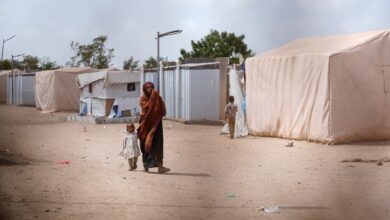
Their main humanitarian priorities remain access to water, food, shelter, and debris removal. Those displaced are living in temporary tents, while others have begun clearing rubble from partially standing homes.
Over the past week, UN partners under the U.S.-facilitated 2720 mechanism secured Israeli clearance for additional humanitarian cargo — nearly 200,000 metric tons of food and essential supplies currently staged in Jordan, Cyprus, Israel, and the West Bank, now en route to Gaza.
Through the Kerem Shalom Crossing, UN teams offloaded and collected aid inside Gaza on Tuesday, including wheat flour, food parcels, nutritional supplements, date bars, hygiene kits, sanitary pads, diapers, tents, and medical equipment. Between Friday and Tuesday, teams recorded the delivery of nearly 3,500 metric tons of essential supplies, according to internal tracking mechanisms.
In the last four days, Israeli COGAT reported 716 trucks crossing into Gaza via Kerem Shalom — roughly one-third UN-coordinated (around 230 trucks). The total includes a mix of commercial vehicles, bilateral contributions, and humanitarian convoys, though the UN continues to warn that overall aid access remains far below the scale of urgent humanitarian needs.