With concerns over the deteriorating situation in Gaza, Sudan, and Ukraine, former Secretary-General Ban Ki Moon suggests that member states have lost the capacity to “effectively communicate.”
With the inability to deliberate and resolve geopolitical tensions, Ban Ki Moon warns that the United Nations are currently undergoing a major loss of credibility, one that must be addressed through inclusivity and political will. In fostering change that has become so necessary, Ban Ki Moon and the UN’s League of Elders urgently call for amendments to the UNSC (United Nations Security Council), citing the “outdated” structure of the international body as a major fault behind the institution’s lack of power within an ever-changing contemporary order.
Founded in 2006 by the late former President of South Africa, Nelson Mandela, The Elders was created as a forum for independent global leaders to disseminate the principal initiatives of the United Nations. With a particular concentration on appointing professionals with esteemed backgrounds and high-level experience, The Elders advocate for peace, justice, human rights, and environmental sustainability.
With a total of 12 members, Chair of The Elders Juan Manuel Santos (former President of Colombia) and Ernesto Zedillo (former President of Mexico) were joined by non-member and former UN Secretary-General Ban Ki Moon.
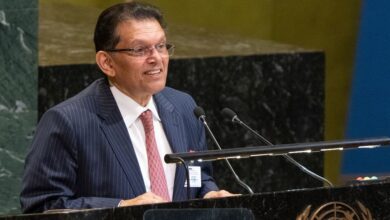
Leading the discussion, Ban Ki Moon acknowledges the major shift in geopolitical dynamics since his position as Secretary-General ended in 2016. He says that since 2016, “the international situation has deteriorated even further, with members of the Security Council deadlocked on almost all the issues.” Facilitating the unequal distribution of power, Moon adds, “permanent members have regularly undermined the UN’s peace and security mandate through their use of veto, which shields themselves, their allies, and their proxies from accountability.”
The former Secretary-General makes note that, with its current polarity on paramount international issues, the Council’s current form is seemingly “not fit for purpose,” craving “urgent reform” that creates a deliberative body better equipped to make decisions efficiently and more fairly. Critical reform is also needed to modernize the institution, with Moon describing the Security Council’s existing structure as non-conducive and “outdated.”
Acknowledging that Security Council reform is “a difficult one,” the former SG contends that it is possible with imminent political will. With the Council’s last major amendment introduced in 1965, adding 10 non-permanent members within its body, other reform is “not impossible.” With political will, the Council’s current structure can be altered and “better equipped for the 21st century, not the 20th century when it was originally founded.”
Championing the slogan “the time for change is now,” Ban Ki Moon urges Permanent Members of the Council to spearhead this change. For the sake of the United Nations’ political trajectory as a credible forum able to lead global initiatives for sustainable development, international cooperation, and regional peace, Ban Ki Moon urges Permanent Council Members to oversee the UN’s Pact for the Future. Adopted in 2024 by the General Assembly, the resolution provides a clear pathway for “modernizing global cooperation,” with Security Council reform at the very top of needed modifications.