Security Council Clashes Over Iran Crisis
Emotional testimony, sharp accusations, and geopolitical rivalries dominate a UN Security Council meeting as members confront Iran’s protests, allegations of repression, and the specter of foreign intervention.


United Nations
Sphinx News: Ahmed Ali
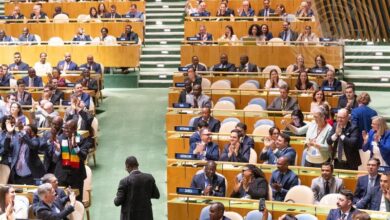
The United Nations Security Council convened amid heightened international concern over the situation in the Islamic Republic of Iran, exposing deep fractures over how the global body should respond to nationwide protests, mounting allegations of state violence, and renewed tensions surrounding Iran’s nuclear program.
Opening the meeting, Ms. Martha Ama Akyaa Pobee, Assistant Secretary-General for Africa in the Departments of Political and Peacebuilding Affairs and Peace Operations, underscored that the nuclear situation in Iran is “best addressed through diplomacy.” Reaffirming the Secretary-General’s position, she recalled the core principles of the UN Charter, calling on states to “settle grievances through dialogue,” warning that escalation and confrontation would only deepen instability in an already volatile region.
The meeting quickly shifted in tone as Iranian dissidents delivered emotionally charged testimony from the Council chamber. Journalist and political dissident Ms. Masih Alinejad accused both the Iranian authorities and the international community of abandoning Iran’s protesters. She insisted that “many Iranian protesters have been silenced, repressed, and undermined,” arguing that Iran is facing a “nationwide uprising” that began on December 28.
Describing the demonstrations as far more than isolated unrest, Alinejad told Council members the current movement is “a revolution” and a rejection of “47 years of tyranny and oppression,” one that spans “all areas and occupations of the state.” She warned that the government’s repeated internet shutdowns were not merely technical measures, stating bluntly, “When a regime turns off the internet in the midst of killing, it is about destroying evidence.”
Her testimony grew increasingly emotional as she accused the Islamic Republic of ruling “through fear” and making people “disappear.” Breaking down in tears before the Council, she said, “The list of names goes on and on,” contending that the number of those killed is “much higher” than what has been officially acknowledged. Alinejad also alleged transnational repression, claiming the campaign against dissidents has been supported by “Russian mobsters and Venezuelan dictators,” and directly addressed Iran’s representative, stating that the Islamic Republic had previously attempted to have her killed. She concluded with one of the most striking accusations of the session, asserting that the Islamic Republic “behaves like ISIS and must be treated like ISIS.”
Human rights activist and journalist Mr. Ahmad Batebi reinforced these claims with personal testimony. He told the Council that under the Iranian regime, dissent is framed in religious terms, contending that authorities claim, “When you fight with our regime, you fight with God.” Batebi recounted being held for two years in solitary confinement, where he was “tortured mentally and physically.” He described Iran as a “demonic regime,” led by what he called a “demonic Ayatollah,” accusing authorities of exporting their ideology beyond Iran’s borders.
Batebi further alleged that Iranian officials buried victims “without identification” and claimed that many of those killing civilians in the streets were members of Iranian proxy groups. At one point, he implored the chamber, saying, “Don’t laugh at me,” before urging what he described as “physical action,” particularly by the United States and its President, Donald J. Trump. He characterized the situation starkly as “genocide in Iran.”
The United States Permanent Representative Mike Waltz, echoed the dissidents’ condemnation, calling the level of violence and repression unleashed by Tehran “unacceptable.” The envoy stated that President Donald Trump and the American people “stand behind the Iranian people,” asserting that the number of those allegedly killed ranges “from the thousands to the tens of thousands.” According to the U.S. representative, only satellite-based internet systems such as Starlink have provided “a slight inkling” of the true scale of the deaths.
The U.S. further accused Iran of spending billions of dollars on its nuclear programs “in support of terrorism,” arguing that the regime is “afraid of its own people” and rules through “repression, violence, and intimidation.” “It has terrorized the Middle East for decades,” the representative said, concluding forcefully, “Enough is enough. We must put an end to the Iranian regime.” The envoy also dismissed Tehran’s claims that the United States and Israel were intervening in the protests, characterizing those assertions as a precursor to justifying repression and deflecting responsibility.
Russia’s Permanent Representative Vasily Nebenzya, sharply rejected the U.S. narrative, accusing Washington of cynically exploiting the Security Council. Moscow argued that the meeting was “nothing but a propaganda tool,” asserting that Washington is “not really concerned about the Iranian people,” but instead is once again attempting to justify illicit military intervention and the overthrow of a sovereign government.
The Russian envoy condemned what was described as U.S. interference in Iran’s internal affairs, calling it a direct violation of international law and Article 2 of the UN Charter. He dismissed the invited speakers as “so-called journalists and guests” who have lived in the United States for nearly two decades, accusing Washington of using “sob stories” as political coercion to advance an anti-Iranian agenda. Labeling the meeting “embarrassing” and “a circus,” Russia warned that claims of armed protesters supported by foreign forces were being manipulated to inflame tensions and destabilize Iran.
Moscow also linked the current crisis to Washington’s unilateral withdrawal from the Joint Comprehensive Plan of Action (JCPOA), arguing that U.S. policies have pushed Tehran into confrontation. The Russian representative condemned any use of force as illegal, stressing that “the United States is not a global judge,” and urged Council members not to allow the body to be exploited for “selfish political agendas.” He referenced the June 2025 U.S. and Israeli military action against Tehran, warning it nearly triggered an “imminent nuclear catastrophe.”
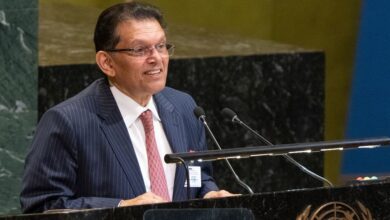
Iran’s Permanent Representative Gholamhossein Darzi, delivered a sweeping and forceful rebuttal, raising a “firm objection” to the participation of what he repeatedly called “so-called representatives of civil society.” He argued that the invited speakers “do not represent Iran’s civil society,” noting they have lived outside the country for nearly two decades and accusing them of advocating violence against law enforcement.
Calling the meeting “shameful,” Iran’s envoy accused the United States of transforming the Security Council into a venue for “theatrics and show.” He claimed the speakers reflected U.S. political ambitions and biases and urged members not to “sell these guests as representatives of Iranian civil society.” According to Tehran, these individuals serve as spokespersons for U.S. and Israeli interests, including Mossad.
Rejecting allegations of mass killings, the Iranian representative stated that peaceful protests beginning on December 28 were “deliberately hijacked by armed groups.” He cited what he described as documented cases of beheadings, widespread firearm use, and attacks on places of worship, arguing these acts reflect “a pattern of systematic violence” by terrorist elements rather than peaceful demonstrators.
The envoy accused the United States of laying the groundwork for political destabilization under a false humanitarian narrative, citing what he called systemic violations of international law, coercive sanctions, and incitement of extremism. He alleged that U.S. actions have gravely harmed Iranian health and lives, while Western members of the Council continue to apply “double standards” on human rights.
Referencing statements by U.S. officials, including remarks about being “locked and loaded,” the Iranian representative warned that any threats against the Islamic Republic constitute “grave violations” of international law. While insisting Iran seeks neither escalation nor confrontation, he cautioned that “any act of aggression will be met with a decisive response,” framing this not as a threat but as a statement of Iran’s right to self-defense under the UN Charter.
As the session adjourned, the Council remained deeply divided, with no consensus on accountability, intervention, or a diplomatic path forward—underscoring the profound international rift over Iran’s internal unrest, regional behavior, and future engagement with the world.