UN Not Involved in New Wave of Lebanon-Israel Negotiations
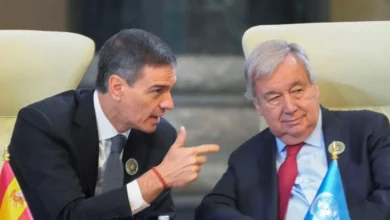
As diplomatic discussions between Lebanon and Israel are set to resume in Washington, D.C. next week, the UN says it is “ready to play a role in the negotiations.”

United Nations, New York City
Sphinx News: Ahmed Ali
While Lebanon and Israel are expected to hold a new round of negotiations in Washington D.C. next week, the United Nations clarifies that it will not be a guarantor to the diplomatic arrangements, raising questions on the organization’s inability to be a part of key political discussions.
Referenced as the “third round” of peace talks between the two neighboring states, Israel and Lebanon, now in renewed conflict for over 70 days, are set to hold a new wave of high-level meetings at the U.S. State Department in Washington, D.C., on either Wednesday and Thursday or Thursday and Friday next week.
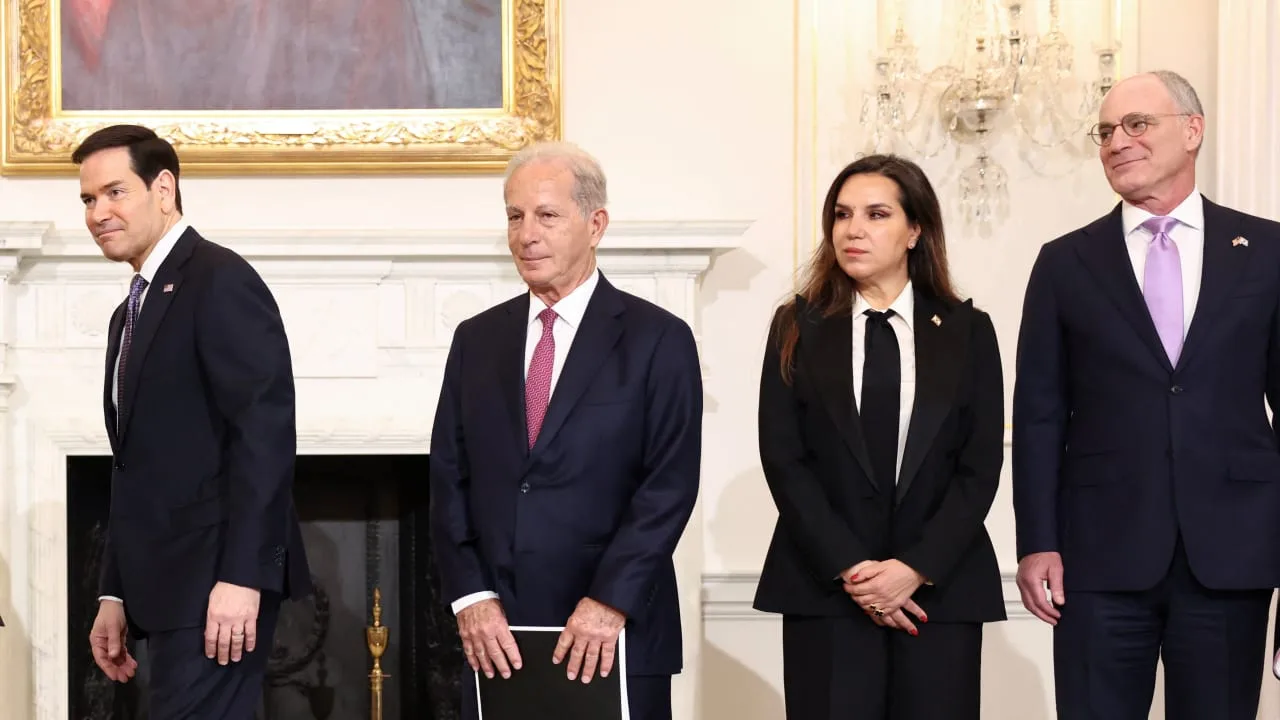
According to reporting made on Wednesday by Lebanese news network LBCI, the Lebanese delegation will include former ambassador to Washington Ambassador Simon Karam, current Ambassador to Washington Nada Hamadeh Moawad, Deputy Chief of Mission Consul Wissam Boutros, as well as representatives of the Lebanese army, according to the report.
In a statement made to Lebanese reporters on Wednesday, Lebanese Prime Minister, Nawaf Salam, confirmed that the discussions are not intended to normalize relations with Israel, but create a foundation for peace, solidifying a common ground of consensus which can avert hostilities between each respective country.
Salam also told reporters on Wednesday that conversations with Israel directly were not completely devoid of the current conditions being discussed between Washington and Tehran, telling LBCI, “Lebanon succeeded in establishing that it is negotiating on its own behalf, but this does not mean the Lebanese track is completely separate from the negotiations track in Islamabad.”
The goal of the upcoming meeting, in line with Salam’s adamancy on “peace,” is one that desires the full Israeli withdrawal from southern Lebanon, allowing Lebanese authorities to exercise its full unequivocal right to control over its territory and national sovereignty.
In an interview today with Al Jazeera, Salam highlighted the state’s need to monopolize the legitimate use of arms, commenting that the government remains “committed to restricting weapons to the state alone,” a comment, of course, that reflects Hezbollah’s military power.
Salam added that Lebanon wants to “solidify” the ceasefire ahead of the next round of negotiations with Israel, professing, “If Israeli attacks continue, the first item on the agenda will be solidifying the ceasefire. We will raise the issue of halting the attacks, releasing prisoners, and setting a timetable for withdrawal in the negotiations, allowing for the return of displaced persons and reconstruction.”
With much at stake in the coming week, the United Nations continued to monitor the situation on the ground. Regarding UNIFIL (United Nations Interim Force in Lebanon) activities along the Blue Line, Deputy Spokesperson for the Secretary-General, Farhan Haq, told reporters, “UNIFIL continues to report extensive Israeli Defense Forces (IDF) activity across its area of operations, including armoured movements, large-scale engineering works, sustained logistical traffic, and significant air activity, mainly in Sector East. UNIFIL also observed drone activity in Sector West, reportedly conducted by Hezbollah.”
Despite the constant bombardment and impediments faced by UNIFIL, Salam expressed his belief in such an international mechanism, suggesting, however, that their existing operations must be revitalized, approached, and constructed in an alternative manner that sees more oversight and guarantees placed on their respective mandates. “We need an international force in southern Lebanon for monitoring, reporting, documentation, and coordination on the ground, a peacekeeping and monitoring force with European participation that takes coordination with the mechanism into account,” Salam said.
Nonetheless, Farhan Haq also pointed to the devastating humanitarian situation on the ground, noting, “According to the Ministry of Public Health, between Wednesday and yesterday evening, at least 12 people were killed and dozens of others were injured.”
Additionally, according to information released by the United Nations OHCHR (Office for the High Commissioner of Human Rights), in conjunction with the Lebanese Health Ministry, since March 2nd, 2026, “at least 1,029 people were killed, 2,786 injured, and more than one million persons displaced in Lebanon.”
While not an arbiter to any renewed negotiations taking place in Washington D.C., the UN Special Coordinator for Lebanon, Jeanine Hennis-Plasschaert, met with senior Israeli and Lebanese officials last week. In her ventures, the Office of the United Nations Special Coordinator for Lebanon released an official statement saying, “Jeanine Hennis-Plasschaert met this week with officials in Israel and in Lebanon for discussions on consolidating the cessation of hostilities and paving the way to lasting stability on both sides of the Blue Line.”
In Israel, the Special Coordinator “discussed with Foreign Minister Gideon Sa’ar and Defense Minister Israel Katz the need for solutions capable of ending recurring cycles of violence.”
In Lebanon, “she met with President Joseph Aoun and Prime Minister Nawaf Salam to discuss ongoing and prospective efforts to consolidate the cessation of hostilities and advance stability.”
As the specificities of the United Nations’ political efforts remained scant, the world awaits the conversations in Washington D.C.