UN awaits details of tentative Middle East Peace Deal
As the United States and Iran prepare to sign a peace agreement this Friday, significant uncertainties remain, with several contentious provisions and key questions still unresolved.

United Nations, New York
Sphinx News: Ahmed Ali
With an elusive diplomatic arrangement on the horizon between the United States and the Islamic Republic of Iran, details remain ambiguous, leaving unclear whether the provisions will avert the region’s ongoing political and economic precipice.
Announced by both U.S. President Donald Trump and Pakistani Prime Minister Shehbaz Sharif, with the latter maintaining the role of arbiter between opposition parties in Tehran and Washington, the United States and Iran have agreed to a signing ceremony marking the end of the conflict. According to Prime Minister Sharif, the ceremony will commence on Friday, June 19th, in Switzerland.
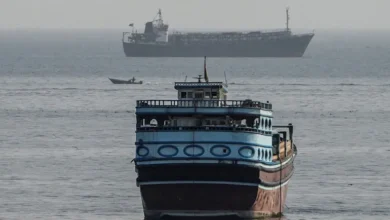
While the agreement, in principle, oversees the complete cessation of hostilities, it is understood that the deal invites both parties to discuss political and economic grievances, differences predicated on the Strait of Hormuz, Tehran’s nuclear enrichment, international sanctions on Iran, and perpetual military aggression by state and non-state actors in the region.
Where countering statements have categorized much of the loose conversation between Washington and Tehran, Iran’s Supreme National Security Council confirmed notice of such a deal, saying in a statement on Sunday, “Based on the agreements reached, the war and military operations on all fronts, including Lebanon, will end immediately and permanently as of tonight, and in addition, the naval blockade against Iran will end immediately and completely.”
Additionally, Kazem Gharibabadi, Iran’s deputy foreign minister for legal and international affairs, said negotiations for a final agreement would continue for 60 days.
However, while not an official guarantor of the peace deal, Israel’s equally belligerent role has enlisted it as a common force within the conflict’s origins, capable of thwarting diplomatic discussions.
On Sunday, President Trump’s comments to U.S. reporters confirmed international inhibitions on the deal’s intrinsic incapability of appeasing Israeli government officials, where Israel’s incursion into Lebanon has created a series of complications in peace negotiations between Washington and Tehran.
Trump said Israeli Prime Minister Benjamin Netanyahu “should be very thankful” to the U.S. for securing the deal as the president lambasted Israeli strikes on the southern suburbs of Lebanon’s capital, Beirut, on Sunday, which he told U.S. media had nearly wrecked the agreement.
“Israel’s fighting Hezbollah for too long, and too many people are being killed. You don’t have to knock down an apartment house every time you’re looking for somebody”, Trump said.
“So, no, I’m not happy with the way Israel has handled itself with Lebanon and Hezbollah… when that happens, it throws a negative light on the big deal with Iran”, he added.
Iran has claimed on all accounts that Israel’s occupation of Lebanon must be addressed within the context of any deal, a sentiment confirmed in remarks made yesterday by Iranian Foreign Minister Abbas Araghchi. “Without the withdrawal of Israeli forces from the territories they occupied during this war, the war has not fully come to an end,” Araghchi said.
Reservations were confirmed on accounts made by nearly all senior Israeli officials.
On Monday, Israel’s Defence Minister, Israel Katz, said in a statement: “Prime Minister Benjamin Netanyahu and I are pursuing a clear policy under which the [military] will remain in the security zones in Lebanon, Syria and Gaza for an unlimited period of time to protect the border and Israeli communities from there against jihadist elements.”
Israel’s National Security Minister Itamar Ben-Gvir echoed Katz’s vehement appeal, stating clearly, “Trump’s agreement does not bind us. Israel is not subject to the United States, and we are an independent and sovereign nation!”
Despite the White House not yet publicly releasing the reported 14-point memorandum of understanding, Israel’s unwavering position on “security buffer zones” may not be the only factor that could threaten a comprehensive peace deal.
Speaking to reporters today at the G7 summit in France, the United States insisted that it will not be responsible for any wartime reparations towards the Islamic Republic of Iran, a position that Iran underscored is essential for the framework and provisions of any agreement.
On the subject of investing in Iran’s fallen civilian infrastructure, Trump said, “And it won’t be from us. We don’t have to give them anything. But some people may want to invest.”
“They need investment,” Trump told reporters, claiming the war caused “maybe two trillion dollars” in damages. “So, somebody’s going to have to help them out. There’s no guarantee about helping them out. It could be that their neighbours will help them out a little bit; I don’t know, but we’re not investing any money.”
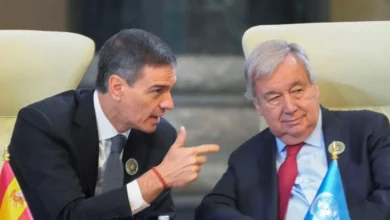
When asked about the Secretary-General’s response to comments made earlier today by President Trump, Stéphane Dujarric, Spokesman for the Secretary-General, told Sphinx News, “Let’s wait for the actual agreement to come through.”
On Israel’s encroachment halting the potential for a long-term deal, Dujarric told reporters, “Look, we’ve always wanted to see Lebanon’s sovereignty respected, and we’ve always wanted to see the Lebanese government enforce its authority throughout the territory along the Blue Line, both north of it and south of it. It is also incumbent on all the parties involved in this conflict to ensure that nothing is done to derail a deal that ends this conflict, starts serious negotiations, and reopens the Strait of Hormuz for freedom of navigation. I will add that we’ve read the press reports, but we still have not seen the official agreement as it stands.”