NASA Plans to Install Nuclear Reactor on the Moon by 2030
A New Space Race Driven by Geopolitical Tensions

Eman Ahmed
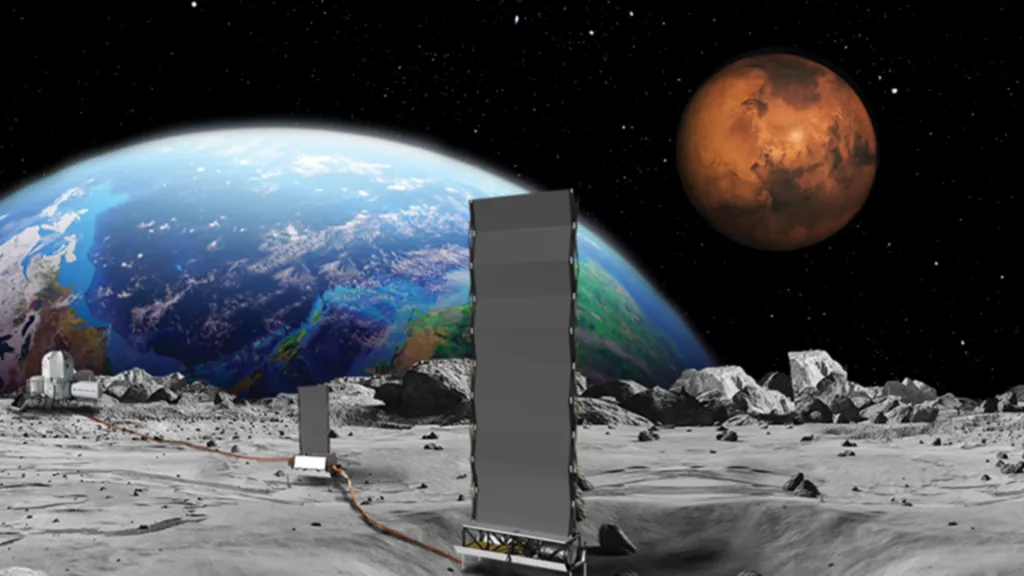
The U.S. space agency NASA is expediting efforts to deploy a nuclear reactor on the Moon by 2030, according to American media reports. The initiative is part of broader ambitions to establish a permanent human presence on the lunar surface.
As reported by Politico, the agency’s acting administrator referenced similar plans by China and Russia, warning that those countries might seek to establish exclusive “keep-out zones” on the Moon.
Despite the bold vision, the feasibility of the timeline remains uncertain amid recent substantial budget cuts at NASA. Some scientists express concern that the project may be driven more by geopolitical motives than scientific priorities.
Several countries including the U.S., China, Russia, India, and Japan are currently competing to explore and potentially colonize the Moon. NASA sees nuclear power as vital to supporting a future lunar economy, potential Mars missions, and U.S. national security in space.
In a letter obtained by the New York Times, U.S. Transportation Secretary Sean Duffy, who was appointed interim head of NASA by President Donald Trump, emphasized the urgency of the project and called for proposals from private companies to build a 100-kilowatt reactor. For context, a typical wind turbine generates 2 to 3 megawatts, making the proposed lunar reactor relatively small.
The concept of nuclear power on the Moon is not new. In 2022, NASA awarded three 5 million dollar contracts for early reactor designs. More recently, China and Russia announced plans to build an automated nuclear power station on the Moon by 2035.
Scientists widely agree that nuclear energy may be the most viable option for providing consistent power on the Moon, where days and nights each last about two Earth weeks. This makes solar energy unreliable for long-term habitation.
Dr. Sungwoo Lim from the University of Surrey argued that building even a small lunar base will require megawatt-scale power, beyond what solar panels and batteries can reliably deliver. “Nuclear energy is not just desirable, it is inevitable,” he stated.
Professor Lionel Wilson of Lancaster University noted that deploying reactors on the Moon by 2030 is technically feasible if funding and launch infrastructure via the Artemis program are adequate.
However, concerns around safety persist. Launching radioactive material into space presents risks, though Dr. Simeon Barber of the Open University said these can be managed with proper licensing.
Duffy’s unexpected directive comes amidst NASA’s internal upheaval and projected budget cuts of 24 percent in 2026, which include scaling back key science missions such as the Mars Sample Return.
Critics worry that the renewed space race risks becoming overly nationalistic. “From a scientific standpoint, this return to competitive space politics is disappointing,” Dr. Barber said. While competition can drive innovation, he cautioned that national interests may overshadow the broader goals of space exploration.
Duffy’s remarks referencing China and Russia likely relate to the Artemis Accords, a 2020 agreement among seven countries outlining cooperative principles for lunar activity. These include “safety zones” around operational sites, which some fear may evolve into territorial claims.
“If you build a nuclear reactor or base on the Moon, you can claim a safety perimeter around it,” Dr. Barber explained. “To some, that begins to resemble ownership.”
NASA’s Artemis 3 mission, aimed at landing humans on the Moon in 2027, faces delays and funding uncertainties, raising further questions about the practicality of installing a nuclear reactor by the end of the decade.