UN Welcomes Strait of Hormuz Reopening as Lebanon Ceasefire Offers Fragile Hope
As Iran reopens the Strait of Hormuz during a Lebanon ceasefire, the United Nations urges respect for navigation rights, sustained dialogue, and full implementation of Security Council resolution 1701

United Nations, New York
Sphinx News: Ahmed Ali
The United Nations has cautiously welcomed Iran’s announcement that the Strait of Hormuz will remain open to all commercial vessels for the duration of the ongoing ceasefire, describing the move as a constructive step amid fragile regional de-escalation efforts.
In remarks delivered today by the Spokesperson for the Secretary-General, the UN emphasized the importance of preserving international navigational rights while urging all parties to build on recent diplomatic developments.
“Turning to the Middle East, I have a statement on the Strait of Hormuz,” the Spokesperson said. “The Secretary-General welcomes the announcement today by the Islamic Republic of Iran that the Strait of Hormuz is completely open for all commercial vessels for the remainder of the ceasefire.”
“The Secretary-General considers this a step in the right direction. The United Nations’ position remains clear: we need the full restoration of international navigational rights and freedoms in the Strait of Hormuz to be respected by all parties.”
The announcement comes as part of a broader and highly complex regional landscape, where parallel diplomatic and military developments are unfolding with, at times, conflicting narratives.
Iranian officials have linked the reopening of the strategic waterway to the recently announced 10-day ceasefire between Israel and Lebanon, framing both developments as interconnected steps toward wider regional de-escalation. Iran’s ambassador to Pakistan described the ceasefire and maritime access as measures that could “pave the ground” for a broader peace agreement, emphasizing diplomacy, regional cooperation, and sustained dialogue.
However, this linkage has been explicitly rejected by the United States. President Donald Trump stated that the Strait of Hormuz decision is not tied to developments in Lebanon, underscoring a divergence in how key actors interpret the unfolding situation. The United States has also indicated that its naval blockade on Iran will remain in place until a formal peace agreement is reached, signaling continued pressure despite the maritime opening.
Adding further complexity, Iran has reiterated its opposition to temporary arrangements, with officials stressing their preference for a comprehensive and permanent end to the conflict across the region rather than short-term ceasefires.
Meanwhile, on the ground in Lebanon, the humanitarian and security situation reflects both cautious optimism and persistent risk.
The United Nations confirmed its support for the recently announced ceasefire between Israel and Lebanon, expressing hope that it will serve as a foundation for longer-term stability. The Secretary-General commended the role of the United States in facilitating the agreement and reiterated the importance of fully implementing Security Council resolution 1701 as a pathway toward a lasting resolution.
UN Special Coordinator for Lebanon Jeanine Hennis-Plasschaert continues to engage with all parties to support adherence to the ceasefire and advance diplomatic efforts.
According to UN peacekeeping forces, no projectiles or airstrikes were detected in their area of operations since midnight, suggesting an initial level of compliance with the ceasefire terms. However, reports from Lebanese authorities indicate that violations have occurred, including a drone strike in southern Lebanon that resulted in at least one fatality, underscoring the fragility of the truce.
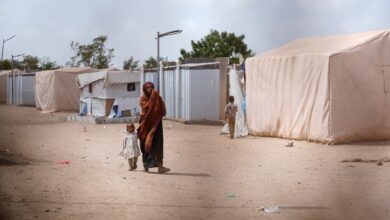
On the humanitarian front, the ceasefire has begun to enable limited returns of displaced populations. Thousands of families have started making their way back to Beirut’s southern suburbs and areas in southern Lebanon, including Nabatieh and Tyre. Major roads have been heavily congested as civilians attempt to return home, even as infrastructure damage—particularly to bridges—continues to complicate access.
Temporary measures, including reinforced river crossings, have been put in place to facilitate movement. Nevertheless, the UN has warned that significant dangers remain, particularly from unexploded ordnance scattered across residential areas in the South and Nabatieh governorates.
Displacement figures reflect gradual improvement but remain substantial. As of today, approximately 113,000 people are still housed in collective shelters, down from 141,000 the previous day. At the peak of the conflict, an estimated 1.2 million people were displaced.
Humanitarian organizations, in coordination with Lebanese authorities, continue to provide assistance, though needs remain acute and unevenly distributed.
Analysts note that while the ceasefire offers a “badly needed respite” for war-weary populations, particularly in heavily affected communities, it does not resolve underlying political and security tensions. Divisions within Lebanon persist, with some factions expressing concern that the ceasefire could embolden armed groups and complicate future negotiations.
Political reactions within Lebanon have also been mixed. Hezbollah’s parliamentary bloc has expressed conditional support for the ceasefire, insisting that any agreement must be comprehensive and lead to a full Israeli withdrawal. At the same time, it has criticized the Lebanese government for engaging in direct negotiations with Israel, warning of potential concessions.
Diplomatic uncertainty extends beyond Lebanon. Reports from Tehran indicate that preparations may be underway for another round of negotiations, potentially involving a provisional framework lasting between 45 and 60 days. However, officials caution that information remains inconsistent, and no definitive agreements have been confirmed.
Against this backdrop, the reopening of the Strait of Hormuz carries significant global implications. As one of the world’s most critical transit chokepoints, its accessibility directly affects international energy markets and economic stability. The UN’s emphasis on maintaining freedom of navigation reflects broader concerns about the potential for disruption in global trade.
The Secretary-General reiterated the United Nations’ full support for ongoing diplomatic efforts, expressing hope that recent measures—including the ceasefire and the reopening of the Strait—will help build confidence among parties and reinforce dialogue initiatives, including those facilitated by Pakistan.
While these developments signal a possible opening for de-escalation, the situation remains fluid and highly sensitive. Contradictory positions among key actors, ongoing security incidents, and unresolved political disputes continue to pose significant challenges.
For now, the ceasefire in Lebanon and the reopening of the Strait of Hormuz represent tentative steps toward stability—steps the United Nations hopes can be transformed into a broader and more durable peace.