UN Officials Condemn Indiscriminate Israeli Operations in Lebanon
While a recent ceasefire has been announced between Israel and the United States with Iran, hostilities continue to run rampant in Lebanon, where recent strikes mark some of the largest escalation on the population since 2024.

United Nations, New York City
Sphinx News: Ahmed Ali
Following a recent ceasefire announcement for Israel and the United States to cease hostilities with Iran, both Tel Aviv and Washington have noted that operations continue in Lebanon, a humanitarian catastrophe that UN officials have described as “unprecedented and intolerable.”
Despite recent comments made by the Pakistani Prime Minister, Shabaz Sharif, on Truth Social that both sides have agreed to a diplomatic framework that sees “an immediate ceasefire everywhere, including Lebanon and elsewhere, EFFECTIVE IMMEDIATELY,” Israel contested the notion, declaring later on X that military operations will continue in Southern Lebanon.
The statement was supported today by U.S. President Donald Trump, who told reporters that the fighting between Israel and Hezbollah is a “separate skirmish,” one that was not guaranteed by the ceasefire “because of Hezbollah.”
Despite alleged efforts by Tehran to include Lebanon in the ceasefire proposal, Israeli strikes on Lebanon today, according to Lebanon’s Civil Defense, have killed at least 254 people, with another 1,165 others wounded.
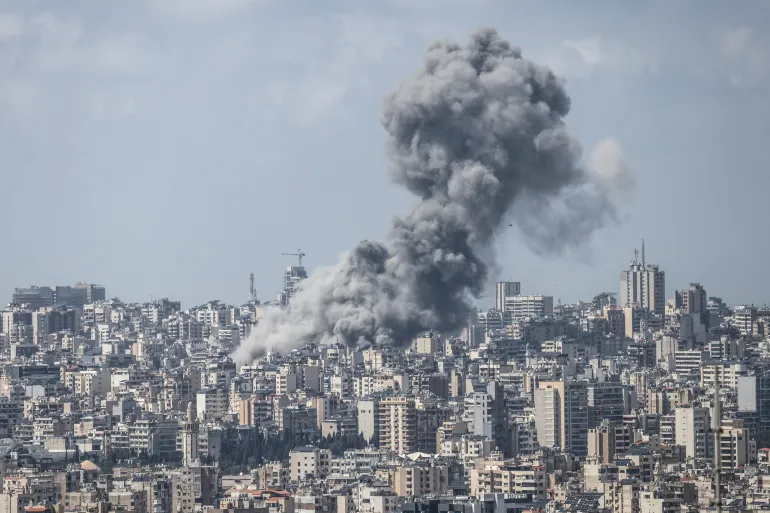
According to the Lebanese Health Minister, Rakan Nassereddine, Lebanon was facing a “dangerous escalation” after Israel launched “more than 100 air strikes” across the country in just 10 minutes, strikes which were aimed at several dense commercial and residential areas in central Beirut without warning.
The attacks, sources indicate, have indiscriminately targeted residential buildings, mosques, medical centers, vehicles, and cemeteries across the country.
One strike targeted a funeral in the Bekaa Valley town of Shmestar, killing at least 20 people.
Several air raids were also reported in central Beirut and the coastal cities of Sidon and Tyre.
The Israeli military “carried out a surprise strike on hundreds of Hezbollah terrorists at command centres across Lebanon. This is the largest concentrated blow Hezbollah has suffered since Operation Beepers,” Defense Minister Katz said in a video statement, referring to a major 2024 operation against Hezbollah involving pager bombs.
The Israeli military said “most of the infrastructure that was struck was located within the heart of the civilian population,” claiming that “steps were taken to mitigate harm to uninvolved individuals as much as possible.”
Hezbollah condemned the attacks and said they targeted “civilian areas in the southern suburbs of Beirut, the capital, Sidon, southern Lebanon, and the Bekaa Valley.”
Lebanese House Speaker Nabih Berri called the attacks a “full-fledged war crime.”
After the attack, Lebanese Prime Minister Nawaf Salam called on the international community to step in and “bring an end to these aggressions.”
Israel “remains utterly heedless of all regional and international efforts to halt the war, not to mention its utter disregard for the principles of international law and international humanitarian law, which it has never respected,” Salam said.
The sentiments of Lebanese authorities were echoed by UN officials, where the Secretary-General said today in a statement, “The United Nations strongly condemns the strikes by Israel across Lebanon that resulted in significant civilian casualties. We continue to call on all sides to avail themselves of diplomatic channels, cease hostilities, and recommit to the full implementation of Security Council resolution 1701.”
Resident Coordinator and Humanitarian Coordinator for Lebanon, Imran Rizam, told reporters today, “This morning, many people across Lebanon were cautiously optimistic about returning home – some even began to move. The events of the past hours, however, are likely to have triggered further displacement.”
“Since the start of this renewed escalation in early March,” he added, “at least 1,530 people have been killed and 4,812 injured between 2 March and 7 April. This includes 130 children killed and 461 injured, and 102 women killed and 544 injured. These are not just numbers; they reflect a deepening civilian tragedy.”
The displacement crisis has also worsened, with displacement orders now affecting “15.5% of Lebanon’s territory,” Rizam said.
While the United Nations has launched a $308 million Flash Appeal to support up to one million people over three months, Rizam warns that “only 30.7 per cent (US$94.8M) of the required funding has been received.”
As well as the unconditional help of international donors, Rizam pleads for an end to the conflict, adding that “There is no military solution. De-escalation and dialogue are urgently needed to prevent further suffering.”