UN experts: Israeli air campaign in Lebanon “not self-defense.”
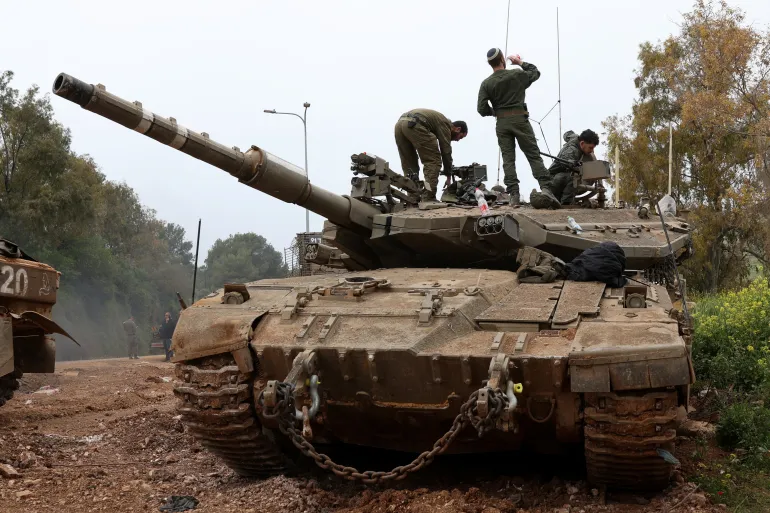
As Israel escalates its military operations in southern Lebanon, UN human rights experts warn the recent airstrikes may constitute war crimes.

United Nations, New York
Sphinx News: Ahmed Ali
The attack, approved by both Israeli Prime Minister Benjamin Netanyahu and Israeli Defense Minister Israel Katz, came just one day after an unstable diplomatic arrangement was agreed to between Tehran and Washington. With many exchanged proposals perceived with a sense of ambivalence by officials from both sides of the aisle, one assertion remained clear from both Tel Aviv and Washington: Lebanon’s security would not be guaranteed.
Conditions, experts ascertained, were auspicious to the incensed and growing Israeli operations south of the Litani River, where Israeli authorities have maintained that such engagement is pertinent to the state’s national security, neutralizing the “threat of Hezbollah militants.”
While Iran insisted the incipient ceasefire stretch to all escalations in the region, including Lebanon, Israel declined, responding the following day with a brazen 10-minute aerial bombardment of, according to officials at the United Nations Human Rights Council, “more than 150 locations” inside Lebanon.
The Secretary General of the United Nations, Antonio Guterres, was quick to condemn the development, calling it an operation which thwarts any prospect for long-lasting peace.
He was particularly vehement in his rhetoric against the sheer human carnage, alluding to the fact that such purported retribution does not merit the attacks on civilians and civilian infrastructure.
Just today, the United Nations Human Rights Council, located in Geneva, Switzerland, released an official press statement on the matter, referring to the 10-minute strikes as an “onslaught” against civilians.
In the official statement, Human Rights experts stated, “We are witnessing the continuing utmost contempt for the international legal order, for diplomacy, and above all for the lives of civilians and the environment in Lebanon.” The coalition of professionals added, “Israel has chosen the very moment a ceasefire was announced – one that its Pakistani mediator stated included Lebanon – to unleash the largest coordinated wave of strikes on the country since 1980.”
While the official United Nations determinant factor of war crimes must be decided by a majority vote within the official judiciary council of international law, the International Court of Justice (ICJ), the appeals set forth by Human Rights experts allude that such a declaration is not ambiguous.
A seemingly indiscriminate venture, the joint experts colluded to debunk statements of “defensive action” made by Netanyahu and his war cabinet, retorting that “This is not self-defense. It is a blatant violation of the UN Charter, a deliberate destruction of prospects for peace, and an affront to multilateralism and the UN-based international order.”
However, the coalition of experts did not conclude the advent of the recent Middle East War to be a sudden breakthrough of Israel’s impeachment of Lebanon’s sovereignty and territorial integrity. The group of experts instead noted that such Israeli actions of impunity have been surfacing for an extended period of time, highlighting that “Since the cessation of hostilities between Lebanon and Israel on 27 November 2024, Israel has repeatedly violated Lebanon’s sovereignty more than 10,000 times.”
The scope of the infractions includes (but not limited to): a consistent violation of airspace, encroachment on Lebanese land, countless occasions, both deliberate and incidental, of activities which violate the sanctity of UNIFIL peacekeepers along the blue line, and military provocations aimed at the Lebanese Armed Forces.
While the specific attack has drawn major international outcry, recently discussed within the Chambers of the Security Council as one with major humanitarian ramifications, the Israelis continue to expand their presence in Lebanon.
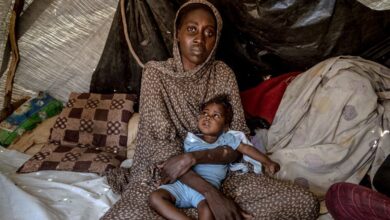
According to Deputy Spokesperson for the Secretary General Farhan Haq, “the Office for the Coordination of Humanitarian Affairs (OCHA) tells us that a growing number of casualties and continued hostilities continue to drive humanitarian needs higher across the country. More than 1.2 million people have been displaced by the crisis.”
He adds, “Across southern and eastern Lebanon, dozens of locations are being hit daily by Israeli strikes. Reports indicate that at least 35 villages in the south were struck yesterday, with extensive damage to residential areas.”
While Haq “welcomed yesterday’s meeting between Lebanon and Israel, convened by the United States”, Tel Aviv and Beirut’s first direct diplomacy in over a decade, experts and civil society members wonder if such efforts not only pave a comprehensive path to peace, but circumscribe Israeli belligerence. “The guarantee for peace”, noted today by the UN High Commissioner for Human Rights Volker Turk, “can only be done through accountability.”