UN Welcomes Murky Middle East Ceasefire — Can It Deliver Lasting Peace?
As the United States and Israel agree to a two-week ceasefire with Iran, will the cessation of hostilities hold, and what are the conditions required to achieve lasting peace?

United Nations, New York City
Sphinx News: Ahmed Ali
Iran has agreed to a two-week ceasefire deal with the United States and Israel, an agreement, however, with convoluted diplomatic conditions, dependent on each state’s willingness to deal with probable concessions.
Announced yesterday on Truth Social by Pakistan’s Prime Minister, Shabaz Sharif, he recalled the diplomatic arrangement to be one of a “sagacious gesture,” with both sides agreeing to a framework that, in its simplest forms, sees “an immediate ceasefire everywhere, including Lebanon and elsewhere, EFFECTIVE IMMEDIATELY.”
Emerging as the clear interlocutors of the agreement, Shabaz Sharif additionally announced that Pakistan sought to “invite respective delegations to Islamabad on Friday, 10th April 2026,” an effort meant to “further negotiations for a conclusive agreement to settle all disputes.”
Shortly after, Iran’s Foreign Minister, Abbas Araghchi, released Tehran’s own acknowledgement of the agreement on Truth Social, stating, “In response to the brotherly request of PM (Prime Minister) Sharif in his tweet, and considering the request by the U.S. for negotiations based on its 15-point proposal,” along with acceptance of “Iran’s 10-point proposal as a basis for negotiations, I hereby declare on behalf of Iran’s Supreme National Security Council: If attacks against Iran are halted, our Powerful Armed Forces will cease their defensive operations. For a period of two weeks, safe passage through the Strait of Hormuz will be possible via coordination with Iran’s Armed Forces and with due consideration of technical limitations.”
U.S. President Donald Trump also took to Truth Social, where he said, “I agree to suspend the bombing and attack of Iran for a period of two weeks. This will be a double-sided CEASEFIRE!” Contending that the United States had “achieved its intended military objectives,” Trump noted his acquiescence to have been predicated on Iran’s decision to “open the Strait of Hormuz,” similarly mentioning that Tehran’s 10-point proposal is “a workable basis on which to negotiate.”
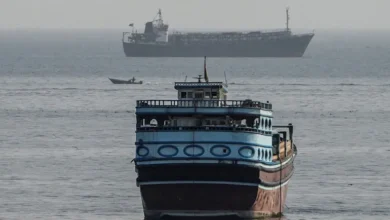
However, interpretations around the reopening of the Strait of Hormuz already seem murky. Tehran’s comments suggest that Iran will still maintain control over vessels, while Washington has referred to a “complete, immediate, and safe opening.”
With the international community wondering how Tel Aviv would react to such a proposal, the office of Prime Minister Benjamin Netanyahu eventually took to X. With the tweet released today, the Prime Minister condoned the agreement, stating, however, that its scope, contrary to Islamabad’s initial assertion, did not extend to the cessation of hostilities in Lebanon.
Despite agreements for fighting to halt, both sides made final attempts to demean the other, positing that diplomatic negotiations are reflective of their triumph. Alluding to the notion that agreeing to the deal was a scapegoat for Tehran, U.S. Defense Secretary Pete Hegseth said American and Israeli forces had achieved a “capital V military victory” and that the Iranian military no longer posed a significant threat to U.S. forces or the region. Conversely, the Iranian military said the country forced Israel and the U.S. to accept its “proposed conditions and surrender.”
Regardless of alternative statements, both Tehran and Washington have made their conditions for ending the war clear. Iran’s conditions have been outlined as follows:
An American guarantee of non-aggression with Iran
Iran’s temporal control of maritime traffic along the Strait of Hormuz
Ending the war on all fronts, including against Hezbollah, in Lebanon
Withdrawal of all U.S. combat forces in the region. This would include U.S. forces deployed in all U.S. bases in the Gulf
Acceptance of Iran’s right to nuclear enrichment
Reparations to Iran for damages caused during the war
Lifting all primary sanctions (sanctions directly imposed) on Iran
Lifting all secondary sanctions (sanctions imposed on other states or corporations in relation to business with said state) on Iran
Termination of all resolutions aimed against Iran by the Board of Governors of the International Atomic Energy Agency (IAEA)
Termination of all UN Security Council Resolutions aimed at Iran
Washington’s conditions have been outlined as follows:
Dismantle all major nuclear facilities
End all uranium enrichment on Iranian soil
Transfer enriched uranium stockpiles out of Iran
Accept intrusive international inspections everywhere
Permanently renounce any nuclear weapons pathway
Suspend ballistic missile development
Stop production of long-range missiles
End drone transfers and military exports to proxies
Cut support to Hezbollah
Cut support to Hamas
Cut support to Iraqi Shiite militias/proxy groups
End weapons transfers to Houthis
Fully reopen and secure the Strait of Hormuz
Stop threatening regional shipping and the Gulf states
Accept a broader regional de-escalation framework, including limits on military escalation with Israel
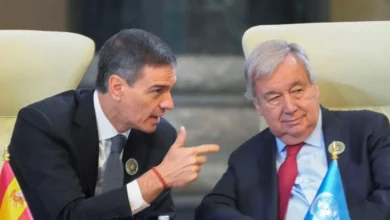
Although clear diplomatic clarity is needed for sustainable peace, the United Nations welcomed the development. Deputy Spokesperson for the Secretary-General, Farhan Haq, told reporters today, “The Secretary-General welcomed the announcement of a two-week ceasefire by the United States and Iran. He calls on all the parties to the current conflict in the Middle East to comply with their obligations under international law and to abide by the terms of the ceasefire in order to pave the way toward a lasting and comprehensive peace in the region.”
Additionally, Haq conveyed the Secretary-General’s gratitude for Pakistan’s efforts in facilitating the discussions. He also told reporters that António Guterres’s Personal Envoy for the Middle East Conflict and its Consequences, Jean Arnault, has arrived in Iran and is visiting countries across the region to support all efforts aimed at averting further escalation and “achieving a comprehensive and durable resolution to the conflict.”
In his travels, Arnault will meet with Iranian officials, “reiterating the Secretary-General’s commitment to making every effort to support a peaceful settlement.”
However, Haq recognized the deal’s fragility, telling the press, “We are worried that any violence in part of the region may play the effect of spoiling the agreements that have been achieved for the rest of the region. So, we want to make sure that all fighting everywhere is abated.” Haq was, of course, referring to the prevailing hostilities between Israel and Hezbollah, a conflict that, according to comments made by President Trump today, is a “separate skirmish.”
“Because of Hezbollah, they were not included in the deal,” Trump told the public broadcaster PBS. “That’ll get taken care of, too. It’s all right.”