UNFPA describes catstophic health crisis for women in Lebanon
As hostilies in Lebanon pervase, despite a nominal ceasefire agreement, the United Nation's sexual and reproductive agency says the health crisis for women and girls worsens

United Nations, New York City
Sphinx News: Ahmed Ali
Despite the preconceived assertion that Israel and Lebanon are meant to be adhering to a ceasefire agreement, hostilities continue to persist, leading to a nominal deal, which UN officials say has led to an inconceivable deterioration in the lives of women and girls within the country.
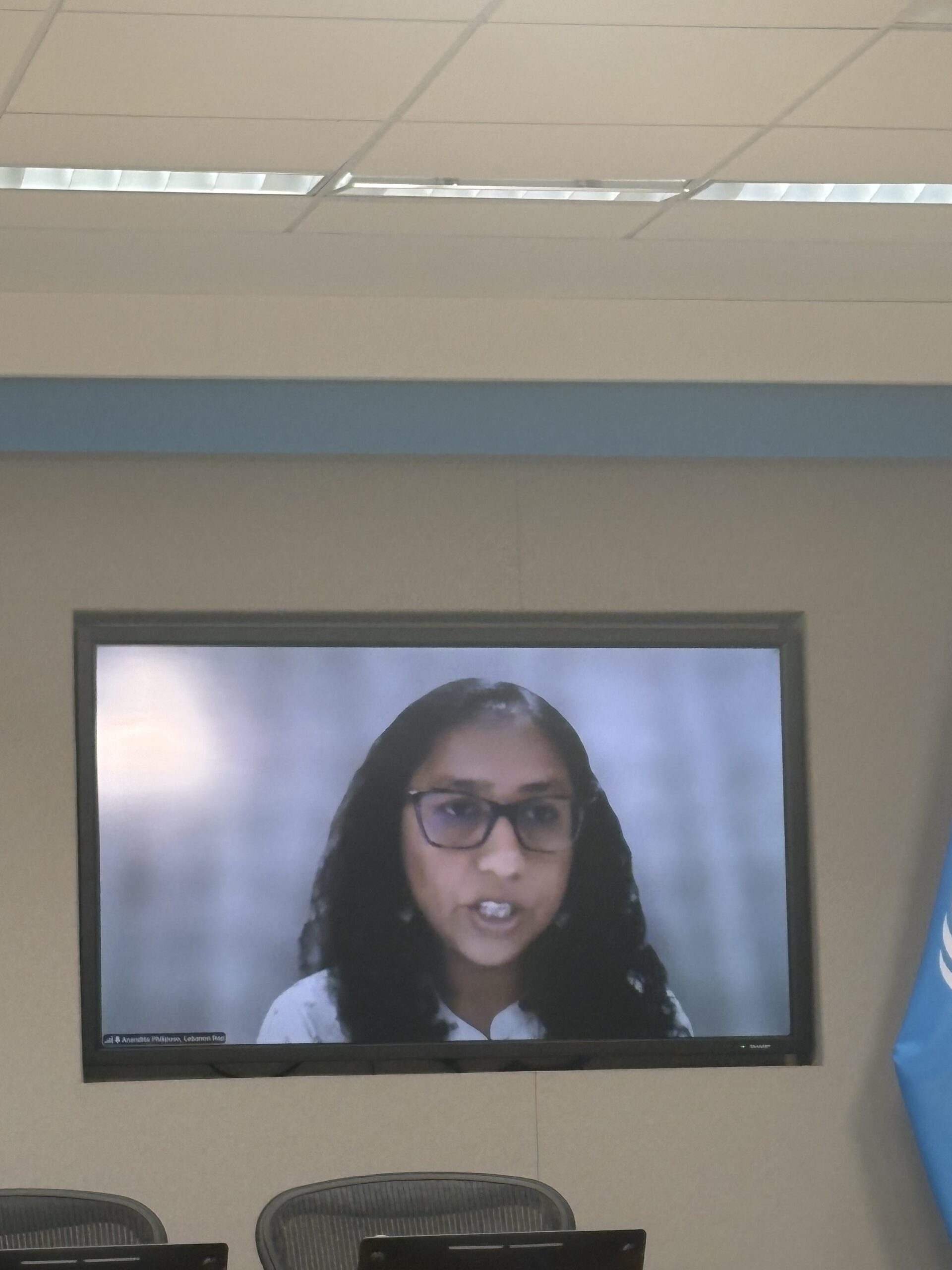
Speaking to reporters today on the situation was Anandita Philipose, UNFPA’s Representative in Lebanon. According to Philipose, the contentious situation in Lebanon, where Israeli encroachments have completely flattened civilian areas and displaced millions of locals, has led to the forced migration of “approximately 13,500 pregnant women” and the death of “128 healthcare workers and 332 injuries.”
The UNFPA’s mandate is firmly espoused on the need to serve women and girls, particularly those in the most vulnerable and disparaging of circumstances. The perpetual disjunction and faulty public sector of Lebanon now faces even further risk of collapse, where ongoing military operations between Hezbollah and the IDF (Israeli Defense Force) have led to “appalling levels of violence, displacement, and human loss” for women and girls across the country.
The destruction of public hospitals, essential roads and highways, and municipal institutions, all compounded by a grave displacement crisis, has escalated the situation to nearly cataclysmic proportions, forcing the UNFPA to urge member states into a flash appeal.
A flash appeal is an instrument deployed by essential UN agencies in times of international peril, requesting funding from member states to distribute life-saving aid in times of imminent need. The latest flash appeal for Lebanon, according to Philipose, was a “modest request of 25 million United States dollars,” an increase from the originally requested flash appeal needed for UNFPA’s operations in Lebanon from March to mid-May. The initial flash appeal had only requested 12 million U.S. dollars, an appeal which was only “30% funded,” says Philipose.
While “an estimated 1500 women remain trapped in southern Lebanon without access to skilled care and safe delivery spaces,” exacerbated by the continuous military violence, forced expulsion, and capitulating government services, Philipose’s call echoes that of UN Secretary-General Antonio Guterres: “a permanent end to hostilities, as well as a respect for international humanitarian law.”
Along with the urgent need for an unequivocal halt in military aggression, Philipose adds that UNFPA also requires “sustained funding for the humanitarian response, particularly critical and underfunded areas, such as maternal and reproductive health, as well as prevention and response to gender-based violence.”
While significant funding decreases have been heavily impacted by the absence of essential U.S. funding, a development UNFPA says has “significantly undermined efforts to prevent maternal deaths, especially in conflict-affected and crisis-hit regions,” it is lacklustre diplomatic arrangements that have allowed antagonisms to surge on the ground.
Despite Lebanese and Israeli officials holding high-level discussions in Washington, D.C., right now, conversations which the Lebanese delegation hopes will stop the incursions into their country, the Israeli position has not only been stubborn but unwavering, contending that large-scale assaults are intended to discourage Hezbollah’s looming “terrorist threat.”
Israel insists that they need more assurances from the Lebanese government that it will successfully facilitate the disarmament of Hezbollah, a position that has been subject to unrelenting pressure from both the administrations of Tel Aviv and Washington, D.C.
Before the renewal of tensions between Hezbollah and the IDF just three months ago, analysts argue that Lebanon had already been making progressive and necessary steps to undermine the military capacity of Hezbollah.
In January of 2026, the Lebanese government had announced that its armed forces had “completed phase 1 of their plan to disarm Hezbollah,” a development that saw the Lebanese military assert “operational control in its territory south of the Litani River,” where Hezbollah holds the greatest military and political influence.
While Israeli Prime Minister Netanyahu deemed such progress as an “encouraging start,” his statement later read, “The ceasefire agreement brokered by the United States between Israel and Lebanon states clearly, Hezbollah must be fully disarmed,” circumscribing “Hezbollah’s efforts to rearm and rebuild its terror infrastructure with Iranian support.”
The latest full-blown military operation launched into southern Lebanon, during Israel and the United States’ war on Iran, experts argue, has emboldened the plight and political legitimacy of Hezbollah, where Israeli authorities are exploiting sectarian tensions and political destabilization for their own expansionist agenda.
Nonetheless, continued violence has not only devastated Lebanon’s state apparatus but also caused considerable damage to the region’s already fragile economic, political, and social affairs.