Iran and E3 Clash Over Snapback Mechanism for Resolution 2231
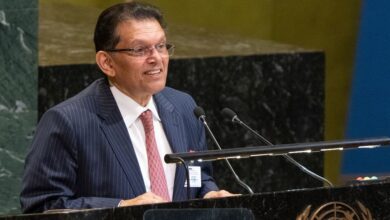
Ambassador Amir Saeid Iravani, Iran’s Permanent Representative to the UN, and E3 representatives (France, Germany, and the UK) brief the press on recent developments regarding the snapback mechanism of Resolution 2231, concerning Iran’s nuclear program.


United Nations
Sphinx News: Ahmed Ali
The Islamic Republic of Iran and the E3 (France, Germany, and the United Kingdom) exchanged sharp words over briefings to the press.
After the foreign ministries of the E3 released a joint press statement yesterday calling for the implementation of the ‘snapback mechanism’ in resolution 2231, it has since been meet with staunch condemnation by members of the international community and particularly, Iran.
The snapback mechanism under the JCPOA allows signatories to reinstate all UN sanctions within 30 days if they believe the Islamic Republic is failing to limit and transparently manage its nuclear program. The sanctions lifted under the 2015 agreement include bans on arms sales, restrictions on Iran’s nuclear program, limits on ballistic missile activities, and measures targeting individuals and entities linked to nuclear or military programs.
After Russian Ambassador Dmitry Polyanskiy criticized the move yesterday, saying “the West has abandoned diplomacy,” Iran reaffirmed this position.
Speaking at a Security Council stakeout today, Ambassador Amir Saeid Iravani, Iran’s Permanent Representative to the United Nations, called the E3’s action “deliberate blackmail.” He described it as “unlawful and politically motivated,” adding that the mechanism “distorts realities on the ground” and “has absolutely no legal basis.” Iravani stressed that Iran has fully complied with its JCPOA obligations, maintaining transparency and cooperating with IAEA investigations. He declared that “the illegal attempt to bring back old resolutions” is categorically rejected by the Islamic Republic, and added, “Iran will not bend a knee to Western coercion and will not engage in progressive dialogue under such conditions.”
Russia and China, also signatories to the JCPOA, echoed Iran’s position. Both argued that the E3 and the United States have failed to comply with the agreement, calling the snapback decision “illegitimate in its legal standing.” Concluding his remarks, Iravani insisted that Iran has never abandoned diplomacy and remains willing to negotiate with members of the JCPOA.
The E3 responded to the Iranian and Russian remarks with their own Security Council stakeout. The three representatives reaffirmed their governments’ position on imposing the ‘snapback mechanism’ under Resolution 2231. They argued, “Since 2019, Iran has increasingly and deliberately ceased performing nearly all of its JCPOA commitments, including the accumulation of a highly enriched uranium stockpile.”
The E3 stated that the Islamic Republic has recently denied access to IAEA investigations and significantly reduced inspections of nuclear material and sites. They emphasized that they have been, and remain, “willing to take all reasonable steps to resolve the matter diplomatically—if Iran adheres to the conditions of the JCPOA.” The representatives concluded by stressing, “we remain determined that Iran must never acquire a nuclear weapon.”