UN Fact-Finding Mission on Sudan Reports Escalating Brutality, and raises questions of RSF Accountability
Fact-Finding Mission urges urgent action as RSF advances raise fears of mass atrocities and destruction of evidence

United Nations
Sphinx News: Ahmed Ali
As the humanitarian crisis in Sudan worsens by the minute, an independent UN Fact-Finding Mission has released its latest report confirming the escalating brutality and human carnage of the Sub-Saharan catastrophe.
In 2023, The UN Human Rights council set up this Independent Fact Finding Mission. Its latest report titled, Paths to Justice: Accountability for Atrocities in Sudan, outlines “serious violations of international humanitarian law” and patterns of violence that are “systematic and deliberately focused.”
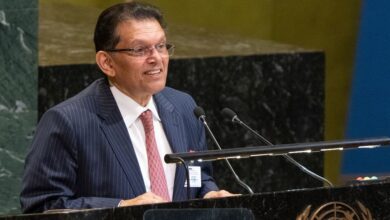
Presented by human rights experts Joy Ngozi Eze and Mona Rishmawi, the pair dive into a report that brings forward the following key features: the collapse of the rule of law and triumph of impunity in Sudan, the blatant regard for civilian life and infrastructure, the urgent need for Member States, regional organizations, and partners to strengthen ICC jurisdiction, the call for an embargo and targeted arms sanctions against all military forces, and the particular concern that the RSF’s seizure of El-Fasher has on the path of the conflict. conflict.
Focusing on the latter, as reported on October 26th, the SAF (Sudanese Armed Forces) has withdrawn from its last stronghold in the city of El-Fasher. The now 500-day besieged city had served as the last remaining SAF presence within the western Sudanese enclave in the Darfur states. The announcement was made by Abdel Fattah al-Burhan, a Sudanese military officer and leader of the SAF, a day after the Rapid Support Forces (RSF) seized control of the main Sudanese army base in El-Fasher and declared victory there.
On Monday, hours after the announcement, Secretary-General António Guterres said the developments represent a “terrible escalation in the conflict,” adding that “the level of suffering that we are witnessing in Sudan is unbearable.”
Members of the international community have since echoed the SG’s sentiment. Humanitarian Relief Coordinator Tom Fletcher told the Security Council today, “women and girls are being raped, people being mutilated and killed – with utter impunity.” Fletcher added, “We cannot hear the screams, but – as we sit here today – the horror is continuing. Tens of thousands of terrified, starving civilians have fled or are on the move. Those able to flee – the vast majority women, children, and the elderly – face extortion, rape, and violence on the perilous journey.”
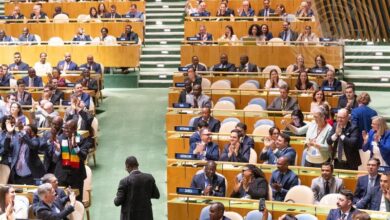
The Security Council, in its meeting today, reiterated in a joint statement, “The members of the Security Council condemned the assault by the Rapid Support Forces (RSF) on El-Fasher and its devastating impact on the civilian population. The members of the Security Council recalled resolution 2736 (2024), which demands that the RSF lift the siege of El-Fasher and calls for an immediate halt to the fighting and for de-escalation in and around El-Fasher, where famine and extreme food insecurity conditions are at risk of spreading further, and strongly urged the RSF to implement the provisions of this resolution.”
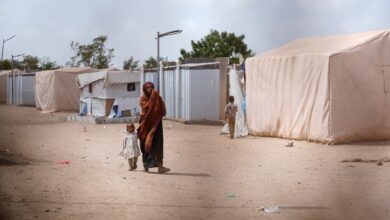
In the latest escalation confirmed by United Nations colleagues on the floor, nearly 500 patients and their companions were reportedly killed in the Saudi Maternity Hospital, one of the few health facilities still operating in the besieged city.
Within the fact-finding report, Sudanese authorities say nearly 132,000 registered cases of international humanitarian violations have been recorded since the beginning of the conflict in mid-2023, yet fewer than 2,000 verdicts have been issued. This marks just 1.5% of cases, with only 366 involving violations by government forces (SAF). While the report outlines that both sides are credibly accused of violating international law, and specifically international humanitarian law, the statistics reflect an overwhelming majority of abuses to have been committed by the Rapid Support Forces.
With its full administrative rule over El-Fasher and effectively all of western Sudan now, concerns are rising over the paramilitary group’s attempt to destroy evidence and eliminate vital witness testimonies. Suggesting that “yes, by previous practice this is true, that when the RSF moves into particular locations, we have seen a lot of destruction of courts, of files, of buildings, of infrastructure, [and] intimidation of witnesses,” Rishmawi holds this is indeed a “major concern.” “Despite everything they are doing,” she says, “the evidence is there, people are documenting, there are records outside the country, and accountability is going to come.”