Arab Group and UN strongly condemn Israeli expansion in Occupied West Bank
As Israel approves a plan for a series of expansionist administrative and enforcement measures in Areas A and B of the occupied West Bank, the United Nations and the Arab Group, condemn the development as eroding the two-state solution.

United Nations
Sphinx News: Ahmed Ali
As the devastation in Gaza continues to unfold, the Israeli security cabinet approved a wide-ranging package of administrative, land, and enforcement measures aimed at significantly expanding Israeli control over the occupied West Bank.
The decision came on Sunday, pushed heavily by Finance Minister Bezalel Smotrich and Defense Minister Israel Katz. The new provisions notably aim to expand Israel’s de facto control in a variety of ways. Under the Oslo Accords of 1993, Areas A and B of the West Bank are considered to be under the authority of the PA (Palestinian Administration). The following measures allow Israeli officials to enforce water violations, environmental protections, and archaeological site issues in these areas, effectively altering the balance of power into the hands of the Israeli administrations and its majority Likud Party:
The provisions of the package have rescinded laws aimed at limiting land sales to Jewish individuals in the West Bank, effectively allowing wider land purchases by Israeli settlers. The package has revived the Israeli Land Acquisition Commission, a state body (dormant for nearly two years), authorized to purchase land strategically, particularly for settlement expansion. In cities like Hebron, control over building permits and planning in key areas, including around religious sites, is being shifted from Palestinian municipal authority to the Israeli Civil Administration. Finally, the administrative package sees the establishment of municipal authorities for certain religious sites, for Israel to oversee infrastructure and civil services.
After the security cabinet had ratified the aforementioned decisions on Sunday, Israel Katz stated, “We are anchoring settlement as an inseparable part of Israel’s government policy.” Furthermore, Israeli Energy Minister Eli Cohen said today control over the West Bank amounts to implementing “de facto sovereignty.” He added the steps “establish a fact on the ground that there will not be a Palestinian state.”
In his immediate reactions, President of the PA, Mahmoud Abbas, called the decision “dangerous” and an “open Israeli attempt to legalize settlement expansion and land confiscation.” Abbas’s office called on both the United Nations Security Council and the United States to immediately intervene.
Yesterday, the Spokesperson for the Secretary-General, Stéphane Dujarric, expressed Mr. Guterres’s denunciation of said developments as “eroding the prospect for the two-State solution.” Dujarric added, “all Israeli settlements in the occupied West Bank, including East Jerusalem, and their associated regime and infrastructure, have no legal validity and are in flagrant violation of international law, including relevant United Nations resolutions.” The United Nations therefore calls on Israel authorities to “reverse these measures and all parties to preserve the only path to lasting peace, which is a negotiated two-State solution, in line with relevant Security Council resolutions and international law.”
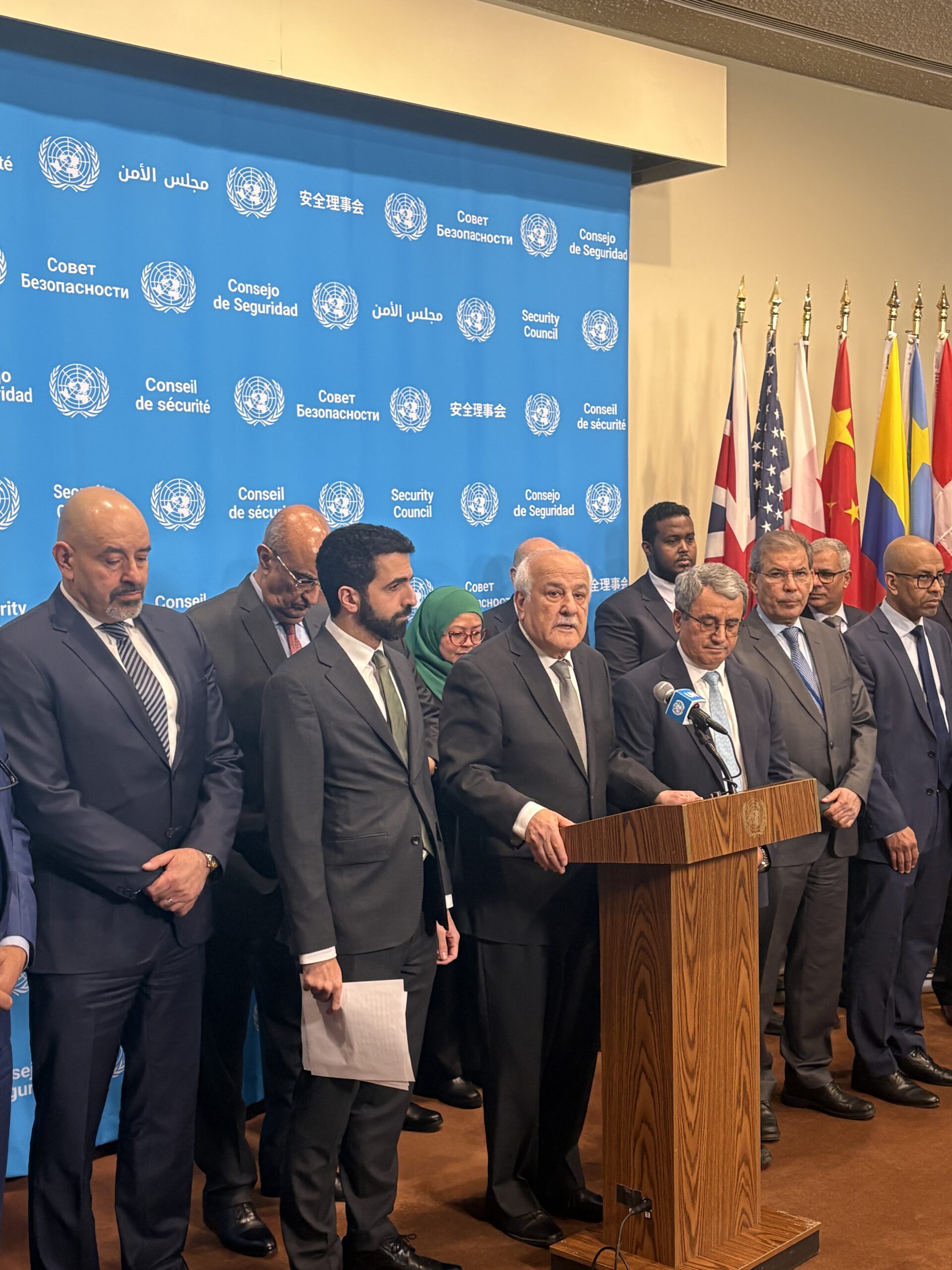
Today, the sentiment has equally been echoed by Riyad Mansour, Permanent Representative of the Permanent Observer Mission of the State of Palestine to the United Nations. In his letter to the Security Council and President of the Security Council for the month of February, United Kingdom Ambassador James Kariuki, Mansour retorted the latest measures by the “Israeli occupying power… expedite its attempt to forcibly transfer the Palestinian people and annex the Palestinian land.” The novel administrative package “intensify the Israeli’s violent repression of the Palestinian people and unlawfully seizing Palestinian territory.” The security cabinet has approved a “legislative measure” that will “escalate its confiscation… demolish homes and properties, and force the displacement of Palestinian families and entire communities.” Mansour posits that the development is also in blatant contravention of international law and relevant UN resolutions, marking an attempt to alter a territory’s demographic, and blatantly undermine (most notably) Security Council Resolution 242 after the 1967 war, Security Council Resolution 2334 (2016), and the July 2024 advisory opinion of the International Court of Justice. The latter he contends affirmed the illicit nature of the Israeli occupation and its violation of “the prohibition of the acquisition of territory by force and the inalienable right to self determination.”
In recent forums, Mansour reiterates the “rejection of annexation” across “Resolution ES-10/24” and the “New York Declaration, by the Global Alliance for the implementation of the two state solution, by the Arab-Islamic countries.” Riyad Mansour therefore calls on the Security Council to “act forthwith to ensure respect of its resolutions on the situation of the Occupied Palestinian territory.” The notion has since been met with reciprocity, where the Security Council is set to discuss the novel development on February 19th, under the heading “Situation in the Middle East.”
Additionally, Permanent Representative of Syria to the United Nations and President of the Arab Group, Ibrahim Olabi, presented a joint statement on behalf of the Arab Group. The joint statement “condemns in the strongest terms the illegal Israeli decision… aimed at imposing unlawful Israeli settlement and entrenching settlement activities.” The group also reiterated its clear rejection of the legislation as “a clear violation of United Nations Security Council resolutions”, encouraging the international community to “assume its legal and moral responsibilities, to compel Israel to halt its dangerous escalation, to reverse its unlawful policies and practices, and to cease the inciting statements of its officials.” Similarly to Riyad Mansour, the Arab Group expresses its appreciation for the statement made by the Secretary-General, but urges a stronger and more comprehensive international response.