أخر الأخبار
UN says Rafah Crossing hold up is down to the “Israelis and Egyptians”
UN Reports Limited Civilian Movement Through Rafah Crossing Since Reopening


United Nations
Sphinx News: Ahmed Ali
United Nations
Sphinx News: Ahmed Ali
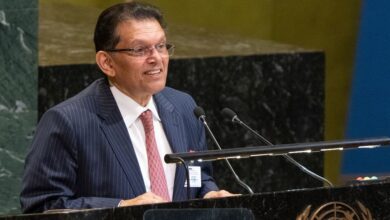
With the United Nations and the Spokesperson for the Secretary-General, Stéphane Dujarric, helping facilitate the movement of “just over 220 people in each direction of Rafah,” the low number has been a product of what he says are “Egyptian and Israeli policies.”
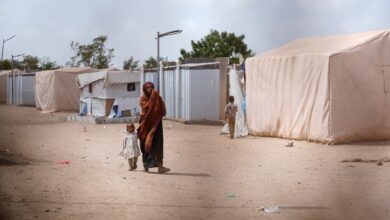
With thousands of Palestinians in need of urgent medical care outside the Gaza enclave, the Rafah crossing presents the only passageway connecting the strip to countries outside of Israel. Connecting Gaza to Egypt, the Rafah Crossing was newly reopened on February 2nd, 2026. The same day, Shimon Freedman, Spokesperson for COGAT (Coordinator of Government Activities in the Territories), made an official statement saying, “The Rafah crossing has been reopened in coordination with Egypt for a limited number of travelers. All Palestinians seeking to leave must undergo Israeli security clearance. This process ensures the safety of both Israel and Egypt and is the reason why only a small number of people can exit at this time.”
On February 3rd, an undisclosed member of the Israeli Defense Ministry told news outlets, “While the crossing is open, Israel is not deliberately blocking departures. The pace is determined by security checks, coordination with Egypt, and operational capacity. Security clearance is essential to prevent the movement of individuals linked to terror activities.”
As of today, Gaza’s government media office has said, “288 Palestinians out of an expected 1,800 have crossed the Rafah border between Gaza and Egypt in both directions since it was partially reopened earlier this month.” The substantially lower-than-expected number has raised major concerns, questioning the efficiency of Israeli forces’ aforementioned “security checks” and the potential bureaucratic impediments being imposed by Cairo.
Adding to the United Nations’ contestations, Dujarric told reporters today, “As we said many a time, we don’t hold the keys to the crossing. We don’t control who gets to go in and out. We’re subjected to the policies put in place by the Israelis, by the Egyptians, and all the other procedures. So, we would like, as I said, we’d like to have more people be able to go out to get medical treatment, more people to go in if they wish to, more people to go in and out as they wish, but we don’t control the procedures.”
Positing that the United Nations is ready to accommodate more, Dujarric added, “Listen, if more people come in, we’ve put in a reception centre.” The goal of the organization, Dujarric exclaims, is to allow Palestinians to “travel freely” in and out of Gaza.