UN says situation in Sudan “is not getting any better”
UN Officials Urge Action at Security Council as Sudan’s War Drives Starvation, Mass Displacement, and Regional Instability

United Nations
Sphinx News: Ahmed Ali
Ahead of a meeting of the Security Council on the situation in Sudan, Yvette Cooper, United Kingdom’s Secretary of State for Foreign, Commonwealth, and Development Affairs, described Sudan as “the greatest humanitarian crisis of the 21st century.”
As she presented information from a UK-led UN fact-finding mission on the siege of El Fasher by the RSF, Cooper described a scene where “starvation was used as a weapon of war, civilians ambushed and slaughtered as they fled, and women raped by the bodies of their murdered children.”
Marking over 1,000 days of war in Sudan, high-level representatives gathered at the Security Council on Thursday, February 19th, discussing the inhumane brutality of the conflict, where genocide, rape, and starvation have all been characteristics of a war that has seen over 40,000 dead and over 12 million displaced.
Al-Harith Idriss Al-Harith Mohamed, the Permanent Representative of Sudan to the United Nations, told the Council, “the war of systemic aggression waged by regional and international forces is employing political activists allied with the Rapid Support Forces militia.” Denouncing the continued actions by the RSF and urging a political solution, Ambassador Mohamed said positive engagement has been made with “members of the African Union, United Nations, and other regional organizations.”
Sudan, for that matter, is keen to launch an inclusive national dialogue “with all political and social forces,” welcoming all those who distance themselves from the “alliance of aggressors” and align with the Sudanese Armed Forces and their “national position.”
The Government of Sudan, he noted, is aiming to launch an initiative aimed at a comprehensive political settlement, where rebellion and government insurrections can halt, humanitarian assistance can enter at full scale, and hostilities can cease, ending what can only be characterized as a devastating last three years of protracted conflict.
He added, “The Government of hope” is developing confidence-building measures, seeking to pave the way for “a successful transition, whose goal is the holding of elections.”
In his comments to the Council, the Representative of the United States highlighted the Sudanese strife, where “more than 12 million people have been displaced, making it the largest displacement crisis globally, with Egypt and Chad bearing the biggest burden of refugees.”
The U.S. representative emphasized the conflict’s global standing, noting that both state and non-state actors have subsidized the growing instability and extremity of the war by deploying “Islamist networks—or any extremist political movement—to manipulate the conflict.” This, he said, “will not be tolerated” and “accountability must apply to all perpetrators, regardless of affiliation.” The United States therefore announced sanctions on RSF commanders for human rights violations, noting that such measures aim to deter the motives, resources, and overall initiatives of said personnel.
In her comments before the Council, the United Kingdom representative, Yvette Cooper, urged international cooperation on a crisis that has evolved outside domestic parameters, escalating into a “regional security crisis and a migration crisis, too.” She warned that continued bloodshed would further destabilize the already fragile Horn of Africa, where millions of Sudanese civilians are seeking refuge. Representative Cooper reaffirmed the United Kingdom’s fiscal contributions to the peace effort, providing over 254 million dollars to the United Nations 2026 humanitarian appeal for Sudan (which is only 13 percent funded). She urged the implementation of all mechanisms to deter perpetrators of violence, calling for “more sanctions” to disrupt “arms flows and exert tangible pressure for peace.”
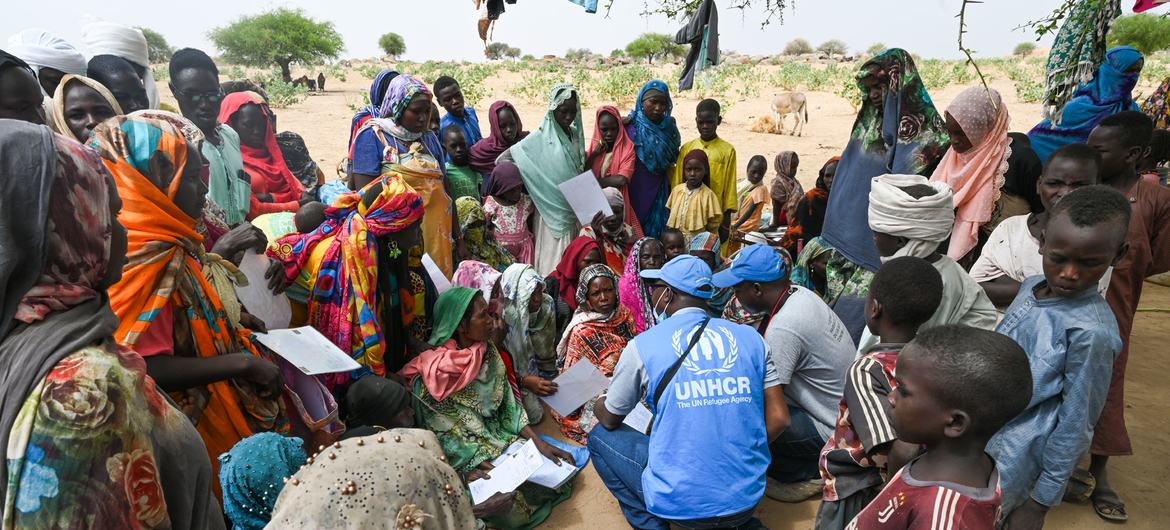
While the international response gains a degree of political momentum and recognition, Stéphane Dujarric, Spokesman for the Secretary-General, remarked on a situation on the ground that is increasingly worsening. In his briefing to reporters, both a dire humanitarian situation in North Darfur and continued drone attacks in North Kordofan are the latest escalations. He noted, “the continuing escalation of violence in the Tine area, on the Sudan-Chad border, is forcing civilians to flee to safety in eastern Chad, and it is constraining our ability for humanitarian access.”
Tawila, Dujarric noted, has been the fastest-growing displacement hub, holding 715,000 people. The increased flooding of people into displacement camps in Tawila has been massively subsidized by the RSF’s attacks on El Fasher in late October 2025. Before the capture and siege of the city, the UN estimated Tawila as hosting a population of only 40,000 people.
In North Kordofan, “local sources report that a drone strike yesterday hit the campus of the University of Kordofan in El Obeid, causing significant structural damage.” To alleviate such human suffering, the United Nations calls for “rapid and flexible funding,” noting that “this year’s Humanitarian Response Plan calls for $2.9 billion to reach more than 20 million people across Sudan.”