UN Secretary-General at CSW70: “Gender Parity Is a Question of Power — and Power Must Change.”
Addressing the seventieth session of the Commission on the Status of Women, the Secretary-General reaffirmed his commitment to feminist civil society, underscoring the need to move beyond entrenched patriarchal systems.

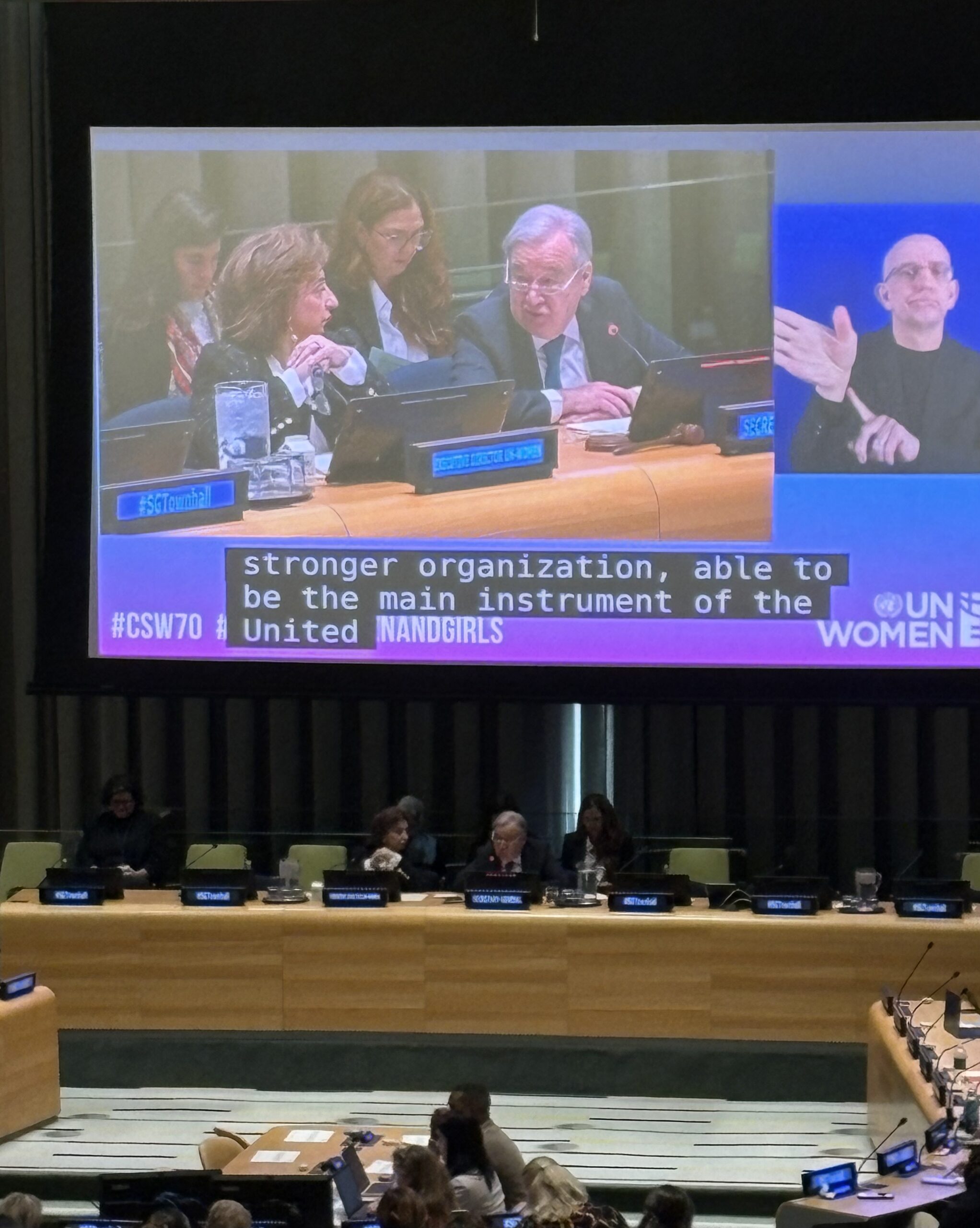
United Nations, New York City
Sphinx News: Ahmed Ali
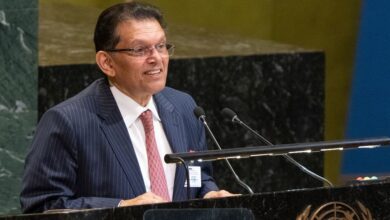
Addressing members of feminist civil society at the 70th session of the Commission on the Status of Women (CSW), the Secretary-General reaffirmed his commitment to gender parity, urging feminist communities to “push back against the patriarchy.”
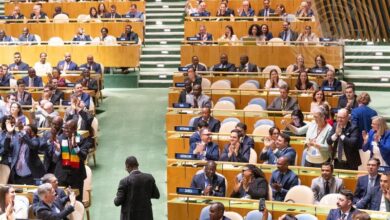
A staunch advocate of gender equality throughout his tenure, the Secretary-General remained steadfast in his approach to women’s rights, addressing women from all corners of the world today at the Trusteeship Council in New York City.
Acknowledging the increasing “male dominated reality” and structural impediments reinforcing the parochial outlook of women in wider society, the Secretary-General remarked, “gender equality is fundamentally a question of power.”
The fight for women’s rights, he contends, has therefore been an ongoing struggle for “the benefits of power,” attempting to challenge the status quo by changing the “foundations of privilege.”
Guterres acknowledges the continuous efforts conducted by women in civil society, underscoring their work as paramount toward giving a voice to those without one. As sexual violence pervades global conflict, freedom of speech continues to be challenged, and organizational funding toward feminist efforts becomes increasingly nullified for its purported “redundancy” and “naivety,” Guterres urges women to keep fighting, noting that their work pushes back against attempts to instill “insecurity and fear.”
As CSW70 resumes for the rest of the week, it is the Secretary-General who will continue to hear inputs from feminist civil society, understanding their proposed architecture and suggestions for how the UN can “advance gender parity.”
As the United Nations continues to be under major financial scrutiny, the Secretary-General’s proposed UN80 initiative has served as a foundational point for strengthening the organization’s contemporary relevance, revitalizing its functionality and amending its agencies toward a “stronger fit for purpose.”
The initiative, however, has recently come under immense polemical appeals from feminist organizations, where the Secretary-General has proposed a potential merger between the UN Population Fund (UNFPA) and UN Women. The decision has been justified on a narrative of creating a unified gender platform, reducing alleged duplication.
Noted within the forum, feminist civil society convened on the notion that such a merger would belittle the campaign for women’s rights, and more specifically reproductive rights, subsequently “weakening implementation and impact.” The mandates of both agencies have been described as “distinct and irreplaceable,” already holding “some of the smallest budgets within the UN system.” Additionally, speakers noted that “according to an analysis on each agencies strategic planning, only 20 to 30% overlap in their programmatic activities.”
As UNFPA focuses on sexual and reproductive rights, while UN Women is the UN organization delivering programmes, policies, and standards that uphold women’s human rights, an attempt to merge the agencies could potentially weaken attempts at gender equality.