Iran War Enters Second Week as Regional Hostilities Intensify
As military escalation ensues and rhetoric intensifies in the ongoing Iran–Israel–U.S. conflict, the UN Secretary-General urges de-escalation and a return to diplomacy.

United Nations, New York City
Sphinx News: Ahmed Ali
Approaching the second week of the ongoing Iran war with the United States and Israel, confrontation heightens as the UN urges a dire return to diplomacy.
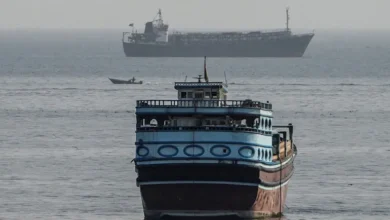
Amplified by the United Nations Conference on Trade and Development (UNCTAD), the pervasive implications of the conflict have produced major global economic repercussions, where the continued de facto closure of the Strait of Hormuz, noted by Stéphane Dujarric, Spokesman for the Secretary-General, has massively stifled global trade.
Referencing the report, Dujarric adds that the “Strait of Hormuz is a critical maritime checkpoint, carrying roughly a quarter of the global seaborne oil, and roughly one third of the global fertilizer trade.” Additionally mentioned in the report, since military hostilities officially began on February 28th, trade along the strait “has reduced by 97%.”
The conflict has also continued to have major repercussions for the civilians of Lebanon, underscored by Dujarric’s alarming contention that “nearly the entire population of Lebanese people living in areas south of the Litani River, Baabda governorate, Beka Valley, and large sections of Beirut’s southern suburbs, are now caught up in hostilities as airstrikes and displacement orders continue.” In just the last week of the conflict, UN humanitarian colleagues, working in conjunction with the Lebanese Health Ministry, have reported that over 660,000 people registered themselves as displaced through the Lebanese government. Dujarric also underlines the large-scale displacements’ contribution toward depleting the already decrepit Lebanese public sector, where health facilities and other services are becoming strained beyond their capacity to provide.
The scale of the hostilities has been exacerbated by continuous fighting between the Israeli Defense Force (IDF) and Hezbollah. Just today, the Israeli authorities again ordered residents of southern Lebanon to flee their homes, posting on X that “air strikes are ongoing” as it operates “with great force in the area” south of the Litani River.
According to the Lebanese Health Ministry, 486 civilians have been killed and thousands more injured, with Dujarric particularly highlighting an Israeli strike “hitting a Red Crescent Ambulance in the town of Majdal Zayoun, injuring paramedics and destroying the ambulance.” As of March 2nd, the World Health Organization (WHO) recorded 23 attacks on health care, resulting in 14 deaths and 26 injuries.
In Gaza, Dujarric recalls a situation with persistent challenges, as Israeli authorities have tightened security measures (reducing the quantity of humanitarian aid throughout the strip) and have continued to keep all crossings (except Kerem Shalom) closed. While impacting the large-scale supply of food and other essential medical services to Palestinians in critical need, the continued closure of all crossings has hindered the supply of fuel, critical to the UN’s campaign of repairing essential civilian infrastructure.
Latest updates on the ground
On the ground, the situation remains increasingly volatile, where today, Iranian Foreign Minister Abbas Araghchi said Iran would continue fighting as long as necessary, contrary to President Trump’s recent notion that the conflict would be “over soon.”
Additionally, the Iranian ISNA news agency is reporting that five people have been killed and several injured in a US-Israeli air strike that hit a residential building in the city of Arak in western Iran.
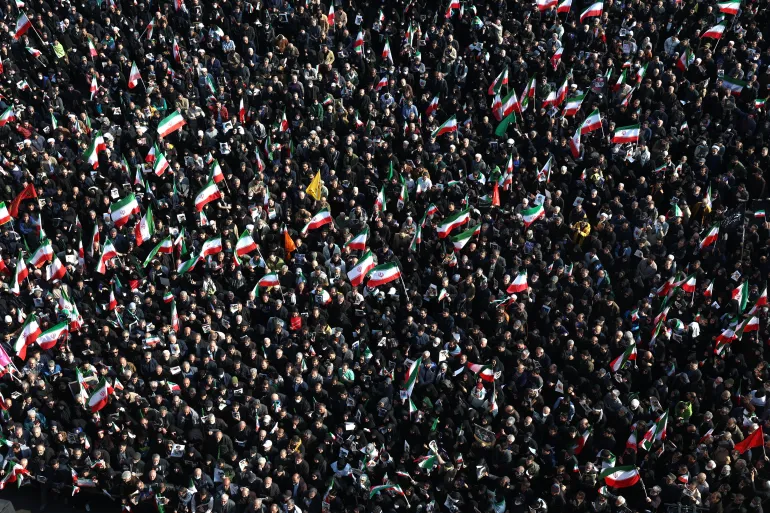
Thousands of Iranians rallied in Tehran to show solidarity with newly appointed Supreme Leader Mojtaba Khamenei, son of the recently passed Ayatollah Khamenei.
According to Iranian authorities, the war has killed more than 1,255 people and injured about 10,000, with Iran’s parliament speaker, Mohammad Bagher Ghalibaf, pledging a “harsh response” to the recent attacks on residential areas in eastern Tehran that killed 40 people.
In Gulf states today, Kuwait, the United Arab Emirates, Saudi Arabia, and Bahrain reported intercepting Iranian missiles and drones. In Saudi Arabia specifically, the Saudi Ministry of Foreign Affairs said on Monday that continued Iranian attacks would lead to further escalation and have a serious impact on relations between the two countries “now and in the future.”
In the United States, President Donald Trump delivered staunch remarks at a press conference on Capitol Hill, outlining to reporters and lawmakers that U.S. military operations “have been going very well” and that the war should be “over soon.”
Despite the purported success, where Trump announced that U.S. military operations have debilitated “80-90% of Iranian missile launchers,” he told Republican lawmakers that he was “not happy,” with the goal being “ultimate victory.”
Meanwhile, the conflict continues to yield a massive regional aftermath. In Iraq, the country’s Prime Minister Shia al-Sudani told US Secretary of State Rubio that “Iraqi airspace, territory, and waters are not used for any military action targeting neighbouring countries or the region.”
Turkey said on Monday that NATO air defenses shot down a ballistic missile in Turkish airspace fired from Iran.
Putin said Russia, the world’s second-largest oil exporter, is ready to work again with European customers to deal with a global energy crisis, and President Emmanuel Macron said France and its allies were preparing a mission to reopen the Strait of Hormuz.