UN Official says approximately 10,000 body bags confirmed in Venezuela earthquake
After a Series of 7.2- and 7.5-Magnitude Earthquakes Struck Venezuela Last Week, UN Official Says 2,500 Structures Affected, with More Feared Dead in the Most Recent Aftershocks

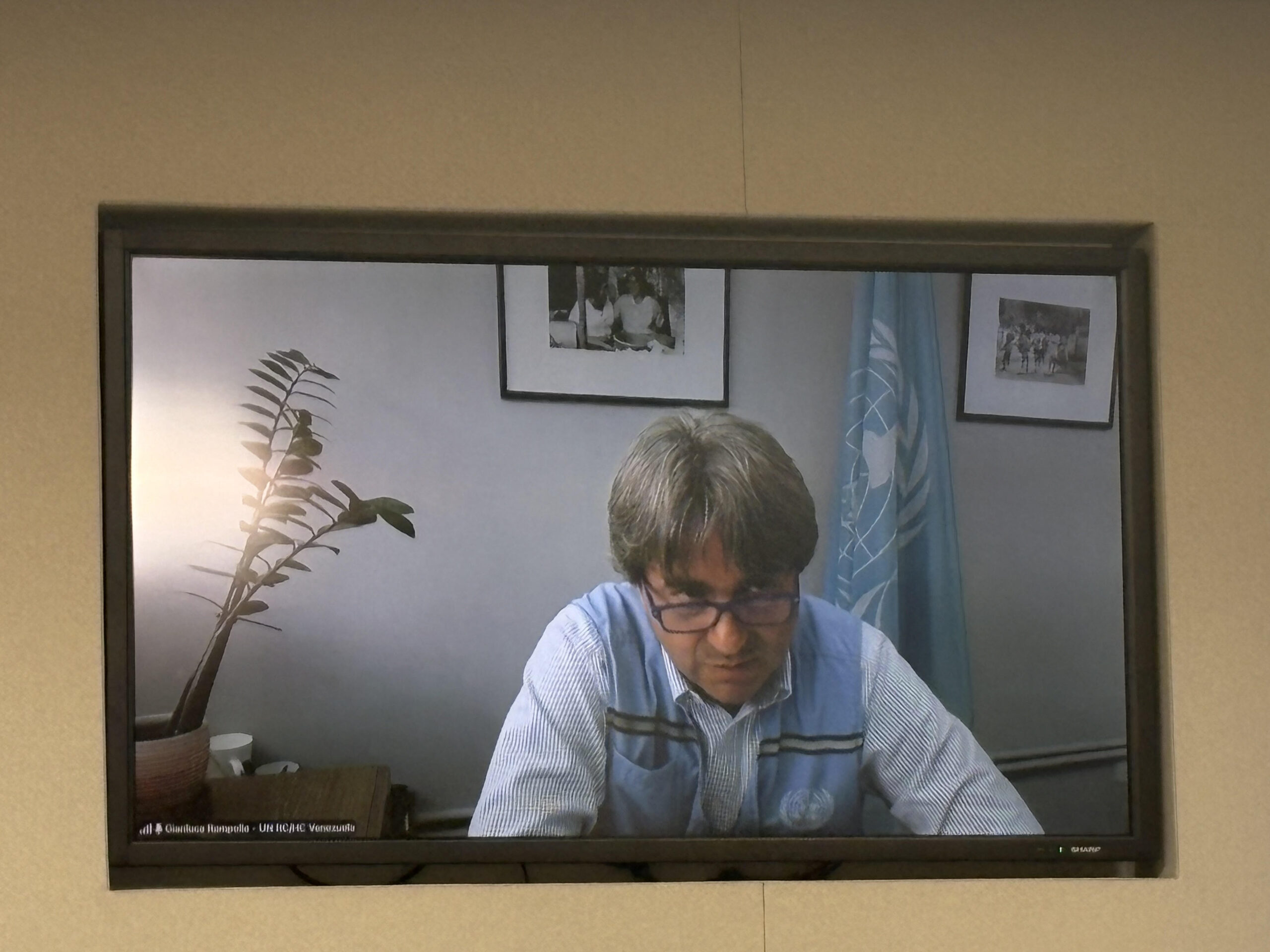
United Nations, New York City
Sphinx News: Ahmed Ali
With both a 7.2 and 7.5 magnitude earthquake hitting Venezuela last week in the state’s upper provinces, Gianluca Rampolla Del Tindaro, Resident and Humanitarian Coordinator in Venezuela, says the earthquakes’ “500 aftershocks” have affected nearly “2,500 structures” within the region.
Aftershock earthquakes, a series of smaller earthquakes which typically occur after a larger one, have recently ensued, categorizing much of what has happened in Venezuela since last Wednesday, when the disaster initially took place. With two separate ruptures, magnitude 7.2 and magnitude 7.5, that occurred just 39 seconds and 5 kilometers apart in northern Venezuela, killing at least 900 people and injuring thousands more, the aftershocks have ranged from anywhere near 4.5 to 5.2, taking the lives of many more innocent civilians.
“Out of the seven states affected,” says Gianluca Rampolla Del Tindaro, “the most affected have been Laguya and the Capital District of Caracas.”
Working in conjunction with the state’s de facto governing authority, led by interim President Delcy Rodriguez, following President Maduro’s apprehension by U.S. forces in January of 2026, Gianluca Rampolla Del Tindaro says UN OCHA’s international rescue team and Disaster Assessment and Coordination experts have confirmed the death of 1,450 people. Additionally, Del Tindaro noted that “3,000 more have been injured, with over 12,000 displaced.”
“These numbers,” he says, will “unavoidably and sadly keep on growing,” while teams continue to conduct search and rescue operations.
As far as the ongoing response from the Venezuelan authorities, Caracas continues to lead a series of search and rescue operations across the seven affected provinces, finding, quite astonishingly, seven people alive yesterday under tons of rubble. This “miracle,” as Del Tindaro calls it, has come “beyond the 72-hour critical window” of survival.
The United Nations, according to Del Tindaro, has been “focusing on emergency medical care and setting up emergency shelter.”
The international community has seen “27 countries mobilize over 40 teams of human rescue missions,” missions, of course, which are focused on navigating devastated towns, hospitals, neighborhoods, and cities to find as many people as possible.
As far as missing people, Del Tindaro contends that the figure is still inconclusive, awaiting further logistical support from Caracas.
The scale of the catastrophe has resulted in an “addendum” to the existing flash appeal for Venezuela, a rapid, coordinated humanitarian response funding plan designed to provide redress to populations abruptly affected by an emergency situation. “The flash appeal,” says Del Tindaro, has been “generously” sought after by UN CERF (Central Emergency Response Fund), the United States, the European Union, and ECHO (European Civil Protection and Humanitarian Aid Operations).