UN Official Warns: “Access Remains a Challenge” in Sudan
Edem Wosornu, Director of Operations and Advocacy for OCHA, briefed reporters following her recent visit to Sudan and Chad. She warned that the humanitarian situation in Sudan is dire, with more than 30 million people in urgent need of assistance. Speaking to Sphinx, Wosornu described access as a “back and forth” challenge, stressing that stronger and more consistent cooperation from both factions is essential to improving the situation.

United Nations
Sphinx News: Ahmed Ali
Edem Wosornu, The Director of Operations and Advocacy for OCHA, reflects on the dire humanitarian situation in Sudan. In the country’s largest cities, El Fasher and Khartoum, she observes, “cities that were once vibrant, now a ghost town.”
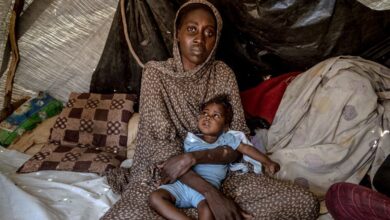
With the conflict between the Rapid Support Forces (RSF) and the Sudanese Armed Forces (SAF) ongoing since April 2023, 30 million people are in urgent need of humanitarian assistance, and another 4 million have been displaced.
Amid numerous challenges, the humanitarian situation has been compounded by what Wosornu describes as “back and forth cooperation” by Sudanese officials. She explains, “when we have access we can do a lot, but the Sudanese officials have gone back and forth with things like permits and visas for aid workers.”
Humanitarian access has long been a challenge in Sudan. Both factions have been credibly accused of using starvation and siege as “weapons of war.” In June 2024, OHCHR issued a statement warning, “The SAF and RSF must stop blocking, looting and exploiting humanitarian assistance.” UN experts stressed that unequivocal humanitarian aid is urgently needed but continues to be impeded, adding that, “Both the SAF and the RSF are using food as a weapon and starving civilians.”
A year later, Wosornu notes, “The Sudanese tells us we are fighting a war in our country so we need to be mindful of national security and military intelligence.”
She adds, “all in all we do get enough cooperation to do cross-border work, but we urge for some of these restrictions to be lifted.” She particularly stresses the situation in El Fasher, where the city remains under siege in North Darfur, severely limiting humanitarian aid to the 11.4 million people in dire need of assistance. Wosornu underscores, however, that OCHA continues to be “in negotiation with the RSF” on this matter.
Reflecting on the broader impact, Wosornu recalls, “a country once the breadbasket of the (African) horn,” now suffers from acute “malnutrition and high food insecurity.”