Iranian Foreign Minister denied Visa for UN Debate
The United States rejects a visa for Iranian Foreign Minister Abbas Araghchi, preventing the top Iranian official from taking part in the UN Security Council’s high-level debate.

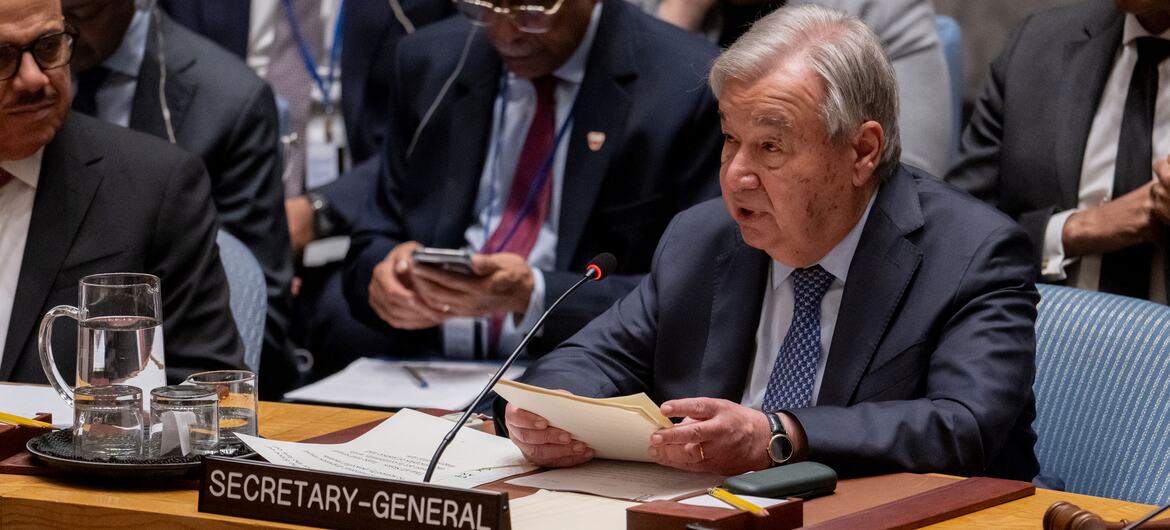
United Nations, New York City
Sphinx News: Ahmed Ali
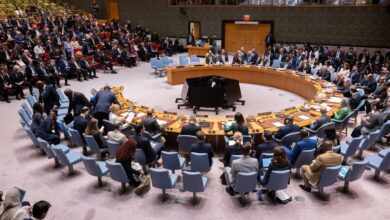
Amid a high-level debate at the United Nations Security Council, hosting senior-level officials and foreign ministries, the United States (host country) has denied Iranian Foreign Minister Abbas Araghchi entrance into the country. With the debate centered on “Upholding the Purposes and Principles of the UN Charter and Strengthening the UN-Centred International System”, the UN warns that such actions by Washington directly contravene its obligations as a host country.
Conducted under the aegis of China and presided over by Chinese Foreign Minister Wang Yi, Iran’s absence from the high-level Security Council meeting comes at a particularly sensitive time in international and Middle Eastern affairs, when Tehran has been at the forefront of regional conflict and diplomatic strain.
As geopolitical rivalries have become inherent to international affairs, specifically incessant in all areas of the world, China has described the meeting as a platform to strengthen multilateralism and political integration, reinforcing the mandate of the Security Council as a credible forum for deliberating and settling global belligerence.
Along with many high-level delegations, China invited senior Iranian official Abbas Araghchi to attend today’s high-level debate.
According to the Iranian state-run IRNA news agency, Foreign Ministry spokesman Esmail Baqaei told a press briefing on Monday that Mr Araghchi will not be travelling to New York to participate in the UN Security Council meeting “due to visa issues”.
The development comes amid continuing back-channel negotiations between Iran and the United States, with Tehran accusing Washington of repeatedly shifting its position during talks aimed at ending hostilities.
Iranian Foreign Ministry spokesperson Esmaeil Baqaei criticised the US stance during a weekly media briefing on Monday, saying the changing American position was complicating negotiations.
“It is correct that we have reached conclusions on a large portion of the discussion topics, but to say that this means the signing of an imminent agreement is something no one can claim. The frequent changes in the positions of American officials complicate every negotiation,” Baqaei said.
Despite the perceptiveness of the ample diplomatic discussions continuously held between Tehran and Washington, Deputy Spokesperson for the Secretary-General, Farhan Haq, underscored the UN’s subtle dismissal of such developments, telling members of the press today that “as part of the Host Country Agreement, we expect the host country to issue visas to all of those who need to participate in the activities of the United Nations at our headquarters here.”
“Any concerns about people not getting visas would be taken up by the Host Country Committee, which is a Member State committee. And so, we would expect them to address this issue”, Haq added.
Equally critical of the United States’ denial of Araghchi’s visa was Russia, denouncing the visa denial as “a breach by Washington of its obligations under the United Nations Headquarters Agreement.”
Russia’s UN ambassador, Vasily Nebenzia, told the Security Council today that the Russian delegation exhausted “all attempts to persuade the US side to issue a visa to him, that visa was ultimately not granted.”
Nebenzia further claimed that such measures were not only illicit and politically motivated in nature, but set a precedent of ostracization and “egregious disrespect for the Chinese presidency of the Security Council and of the topic that is under discussion today.”
“Instead of adhering to the UN Charter”, Nebenzia insisted that the West, spearheaded by the initiatives of the United States, is attempting to establish its own “rule-based order”, one that ultimately seeks to undermine the credibility, sanctity, and benevolence of the UN Charter.