Bahrain-led UN resolution on Strait of Hormuz cosponsored by 112 states
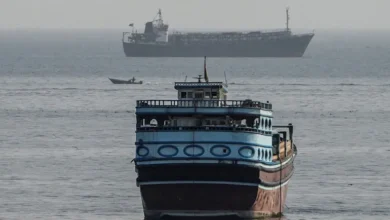
Bahrain pushes another UN resolution through the Security Council calling for "freedom of navigation" and "cessation of Iranian hostilities"

United Nations, New York City
Sphinx News: Ahmed Ali
As Bahrain encourages the passing of yet another Security Council resolution against the Islamic Republic of Iran, political polarization flares up, with the resolution gaining diplomatic backing from 112 other UN member states.
In its contents, the Bahrain resolution was crafted in conjunction with other members of the Gulf Cooperation Council (GCC) and the United States, intended to denounce Iranian actions in and around the Strait of Hormuz, said to “ensure freedom of navigation” around the critical maritime route.
Aside from Bahrain and the United States, the resolution’s principal sponsors are Qatar, Saudi Arabia, and Kuwait. Among its lesser supporters are India, Japan, South Korea, Kenya, Argentina, and most member states of the European Union.
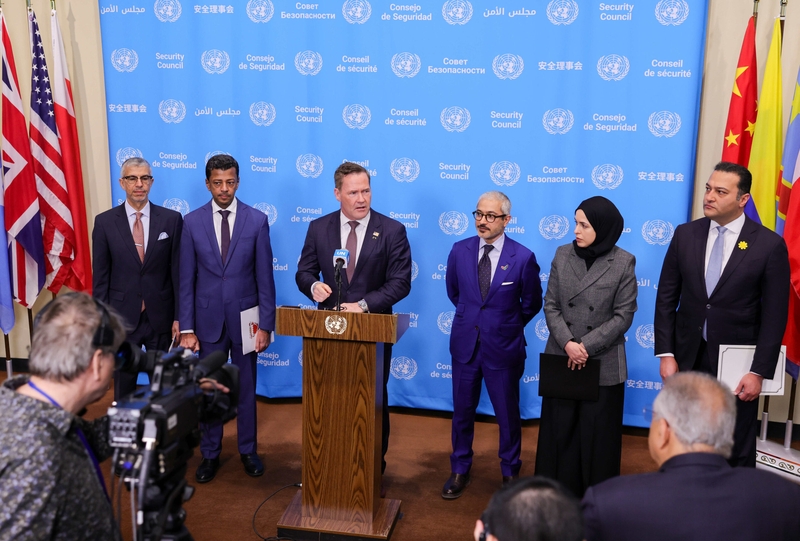
On Thursday, May 7, Ambassador Jamal Fares Alrowaiei of Bahrain, joined by Ambassador Mike Waltz of the United States and other permanent member state representatives, held a joint Security Council stakeout, publicly expressing support for the draft resolution.
In his remarks to the press, Ambassador Alrowaiei stated, “Recent developments have underscored the importance of keeping this strategic waterway safe, secure and fully open. They have also shown the need for collective action.”
Alrowaiei explained that joint action was not just an ambitious and ambiguous euphemism, but a guarantee that member states in support of the resolution’s context would take extensive measures to guarantee the “international security of the Strait of Hormuz,” calling the maritime route an indispensable asset to global trade.
Ambassador Alrowaiei explained that the draft resolution was insistent on “building off of Resolution 2817,” a resolution passed March 11, 2026, condemning Iranian actions against neighboring Gulf states as a direct contravention of international law. The resolution would also censure Iran’s alleged attacks against civilians and civilian infrastructure, setting a precedent of polemics against the actions of Tehran.
The Bahrain representative added that “Allowing such action to become normalized is unacceptable. In addition, the draft addresses participation in the United Nations’ efforts to establish a humanitarian corridor in the Strait.”
Ambassador Waltz built on the Bahraini representative’s protests, explaining to reporters that the entire global economy is “what’s at stake here – nothing less than a cornerstone of worldwide stability and commerce.” He warned that “those who abuse it, or seek to throw it out, are setting a very, very dangerous precedent – and frankly setting the stage to doom global trade.”
Later in the day, Iran’s Ambassador Amir Saeid Iravani told reporters at the stakeout that the contents of the draft resolution are “deeply flawed, and one-sided,” adding that both the United States and the GCC “claim that their actions are intended to protect freedom of navigation in the Strait of Hormuz and made some baseless allegations against my country. The facts on the ground prove otherwise.” He said Washington’s actions contradicted the administration’s stated objectives “and have served only to escalate tensions and deepen instability in the region.”
Iran’s criticisms of the draft text were echoed by both Russia and the People’s Republic of China, highlighted by both states vetoing the last proposed resolution on April 2, 2026. As it currently stands, no date has been set for voting on the latest draft text.
The tensions within the Security Council are reflective of ongoing geopolitical resentments, where a fragile “ceasefire deal” continues to be challenged by diplomatic objections from both Washington and Tehran. The US is demanding that Iran dismantle its nuclear programme and lift its restrictions on the strait. Iran has countered with calls for war reparations, an end to the US naval blockade of its ports, and a ceasefire on all fronts, including in Lebanon, where Israel is fighting Iranian-backed Hezbollah.
As of Tuesday, Iran’s Deputy Foreign Minister Kazem Gharibabadi accused the US of seeking capitulation rather than peace, taking to X to say, “True peace cannot be built with the language of humiliation, threat, and forced concession-taking.”
Just today, U.S. President Donald Trump told reporters that the ceasefire is “on life support,” maintaining, however, that a deal is still “very possible.”